
Search Results
Showing results 1 to 20 of 41

Newton's Laws Demonstrations
Source Institutions
In this collection of demonstrations, learners explore Newton's Laws of Motion.

A Funny Taste
Source Institutions
In this activity, learners explore the different salinities of various sources of water by taste-testing.
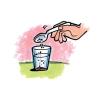
Changing the Density of a Liquid: Adding Salt
Source Institutions
Learners see that a carrot slice sinks in fresh water and floats in saltwater.
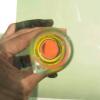
Rotating Light
Source Institutions
In this activity, learners explore what happens when polarized white light passes through a sugar solution.
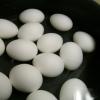
Salt 'n Lighter
Source Institutions
In this activity, learners discover that as the salinity of water increases, the density increases as well. Learners prove this by attempting to float fresh eggs in saltwater and freshwater.
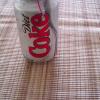
Diet Light
Source Institutions
In this quick activity, learners observe how the added sugar in a can of soda affects its density and thus, its ability to float in water.
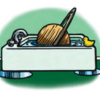
Dunking the Planets
Source Institutions
In this demonstration, learners compare the relative sizes and masses of scale models of the planets as represented by fruits and other foods.

Underwater Fireworks
Source Institutions
In this activity, learners investigate diffusion by creating underwater "fireworks" using food coloring, oil and water.
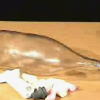
Amazing Marshmallows
Source Institutions
In this demonstration, learners observe the effects of air pressure. They will watch as marshmallows inside a bottle expand as a vacuum pump removes air from the bottle.
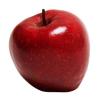
An Apple as Planet Earth
Source Institutions
In this environmental education demonstration (page 6 of the PDF), learners will see a tangible representation of the scarcity of soil resources on earth.
Pepper Scatter
Source Institutions
In this activity, learners explore the forces at work in water. Learners experiment to find out what happens to pepper in water when they touch it with bar soap and liquid detergent.
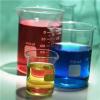
Red, White and Blue II Demonstration
Source Institutions
In this chemistry demonstration, learners investigate the rule "likes dissolve likes" by combining three, immiscible liquids to create a colorful density column.
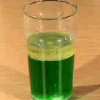
Erupting Fizz
Source Institutions
This is a highly visual demonstration that illustrates both the effects of density and chemical reactions.
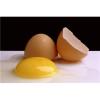
Protect That BRAIN!: Mr. Egghead
Source Institutions
This activity demonstrates the importance of wearing a helmet to protect the brain. An egg is used to symbolize a head with the shell as the skull and the inside of the egg as the brain.
DNA Nanotechnology
Source Institutions
In this activity, learners explore deoxyribonucleic acid (DNA), a nanoscale structure that occurs in nature.
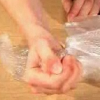
One In The Hand
Source Institutions
In this physics demonstration, learners are challenged to break a raw egg just by squeezing it. Learners will be shocked by their inability to complete the deceivingly simple challenge.
Egg-Citing Physics
Source Institutions
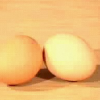
In this demonstration about momentum, use physics to distinguish between a hard-boiled egg and a raw egg without cracking them open.
Amphibian Skin
Source Institutions
In this activity, learners explore the concept of permeability to better understand why amphibians are extremely sensitive to pollution.
Rate of Solution Demonstration
Source Institutions
In this chemistry demonstration, learners investigate the factors that increase the rate of dissolution for a solid.
Fuel for Living Things
Source Institutions
In this activity, learners observe what happens when yeast cells are provided with a source of food (sugar). Red cabbage "juice" will serve as an indicator for the presence of carbon dioxide.