
Search Results
Showing results 1 to 20 of 91
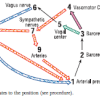
Baroreceptor Reflex Role Play
Source Institutions
In this activity about the baroreceptor reflex (BR) arc (page 123 of the PDF), learners discover the importance of maintaining adequate arterial blood pressure through a role playing exercise.
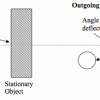
Where Will It Go?
Source Institutions
In this activity, learners predict where a ball will go after it bounces off another object. Learners discover that the motion of objects is predictable based on laws of motion.

Measurement: How Many Noses Are in Your Arm?
Source Institutions
In this math lesson, learners apply the concepts of ratio and proportion to determine the length of the Statue of Liberty's torch-bearing arm.

Measuring Your Breathing Frequency at Rest
Source Institutions
In this activity about the brain and sleep (on page 138 of the PDF), learners measure their resting breathing rates. Learners will discover that breathing frequencies vary amongst individuals.
Statistics: Wet Heads
Source Institutions
In this math lesson, learners learn how to construct stem and leaf plots. Learners first estimate the number of drops of water that will fit on the head of a penny.
Kelsey: Clues of the Dig Site Map
Source Institutions
In this activity, learners explore dinosaur fossils and a dig site. Learners work in groups to analyze a dig site map and match bones to a skeletal drawing of Kelsey (a Triceratops).
Create a Dinosaur Name
Source Institutions
In this activity, learners explore how dinosaurs are named and what their names mean. Learners listen to "The Littlest Dinosaurs" by Bernard Most.
Message in a Neuron
Source Institutions
In this activity, learners play a simple card game to learn the sequence of events in the transmission of nervous system signals.
Why Circulate?
Source Institutions
In this activity related to the human circulatory system (on page 10 of the PDF), learners observe the dispersion of a drop of food coloring in water, draw conclusions about the movement of dissolved
Drugs, Risks and the Nervous System
Source Institutions
In this activity, learners estimate risks associated with different events and compare their estimates to the real possibilities.
Polynomial and Rational Functions: Building Boxes
Source Institutions
In this math lesson, learners explore polynomial and rational function patterns.
Pinhole Viewer
Source Institutions
In this activity, learners discuss and investigate how cameras, telescopes, and their own eyes use light in similar ways.

Whale Communication Hide and Seek
Source Institutions
In this activity, learners pretend that they are orcas and search for their "pods" using Morse code.

What Shape Is It?
Source Institutions
In this activity, learners determine the shape of an unseen object by bouncing a ball off the object.
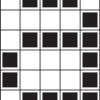
Color by Numbers: Image Representation
Source Institutions
Computers store drawings, photographs, and other pictures using only numbers. Through this activity, learners decode numbers to create pictures using the same process that computers use.
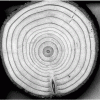
Trees: Recorders of Climate Change
Source Institutions
In this activity, learners are introduced to tree rings by examining a cross section of a tree, also known as a “tree cookie.” They discover how tree age can be determined by studying the rings and ho
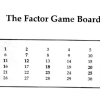
Number Systems and Number Theory: Factor Game
Source Institutions
In this math lesson, learners play a game to identify the properties of prime, composite, abundant, deficient and perfect numbers.
Understanding Albedo
Source Institutions
In this activity related to climate change, learners examine albedo and the ice albedo feedback effect as it relates to snow, ice, and the likely results of reduced snow and ice cover on global temper
The Thousand-Yard Model
Source Institutions
This is a classic exercise for visualizing the scale of the Solar System.
Dinosaur Names: Common and Science Names
Source Institutions
In this activity, learners explore how dinosaurs are named and what their names mean. Learners listen to "The Littlest Dinosaurs" by Bernard Most.