
Search Results
Showing results 241 to 260 of 350
Clipbirds
Source Institutions
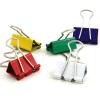
In this simulation of natural selection, learners use binder clips in three different sizes to represent the diversity of beak sizes in a bird population.
Mass, Area, Volume
Source Institutions
In this activity (page 18 of PDF), learners will measure the volume of impact craters created by projectiles of different masses.
Sidewalk Chalk
Source Institutions
In this chemistry activity, learners witness an exothermic reaction, while making their very own, completely usable sidewalk chalk. This is also an excellent activity for exploring color mixing.
Pipeline Challenge
Source Institutions
In this activity, learners explore how engineers develop pipeline systems to transport oil, water, gas, and other materials over very long distances.
Sensational Seaweed
Source Institutions
In this culinary activity, learners use multiple senses (sight, smell, touch, and taste!) to explore real seaweed samples.
Breathing Yeasties
Source Institutions
In this life science activity (page 8 of the PDF), learners explore the carbon cycle by mixing yeast, sugar and water.
Design a Flavor: Experiment to Make Your Own Ice Cream Flavor!
Source Institutions
In this delicious activity, learners get to make, taste-test and compare their own "brands" of homemade strawberry ice cream.
Water Fountain
Source Institutions
In this activity, learners explore how a hydraulic pump works. Learners work in teams to design and build a unique water fountain that employs a hydraulic pump.

Tennis Anyone?
Source Institutions
In this activity, learners explore sports engineering and advanced materials development.
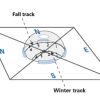
Reason for the Seasons
Source Institutions
In this activity (on page 6 of the PDF), learners plot the path of the sun's apparent movement across the sky on two days, with the second day occurring two or three months after the first.
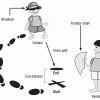
Find Your Way Around Without Visual or Sound Cues
Source Institutions
In this activity, learners play a series of simple games to investigate navigation without visual and sound cues.
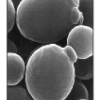
Energy For Life
Source Institutions
In this activity about the relationship between food and energy (page 1 of PDF), learners observe and quantify the growth of yeast when it is given table sugar as a food source.
Fossil Age Estimation Model
Source Institutions
In this activity (page 1 of the PDF under SciGirls Activity: Dinosaurs), learners will model how paleontologists estimate the age of fossil discoveries by extracting “fossil” playing cards from newspa
Wild or Domestic Animal Game
Source Institutions
In this quick activity (page 2 of PDF), learners will play a game using their observation and listening skills, interpreting clues from each other to deduce their secret animal identity.
A Universe of Galaxies: How is the Universe Structured?
Source Institutions
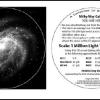
This fun hands-on astronomy activity lets learners explore models of the Milky Way and other galaxies to get a sense of relative distances to other galaxies.
Exploration Tank
Source Institutions
This is a guide for facilitating interaction at a touch tank with marine animals. The instructions are for setting up a display in an informal science center, but could work anywhere.
That's the Way the Ball Bounces: Level 2
Source Institutions
In this activity, learners prepare four polymer elastomers and then compare their physical properties, such as texture, color, volume, density, and bounce height.
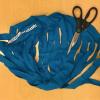
T-Shirt Transformation
Source Institutions
In this activity, learners will repurpose an old t-shirt to create their own yarn or string.
Population Game
Source Institutions
In this outdoor game, learners simulate a herd of deer trying to survive in an area called the "home range." Learners explore the concept of "carrying capacity"—what size population of an organism can
Prepare for a Dock Shop Field Trip
Source Institutions
In this activity, learners explore what makes a boat float and sink. They examine and test various objects to determine why objects float or sink.