
Search Results
Showing results 741 to 760 of 2059
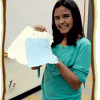
Make Your Own Paper
Source Institutions
The Chinese invented paper made from plants and cloth about 2,000 years ago. Learners follow a similar process to make paper from recycled paper.
Strike 'em Down & Add 'em Up!
Source Institutions
In this activity, reuse two-liter bottles to create bowling pins. Learners practice math skills and develop a concept of verifying answers, while bowling and keeping score.
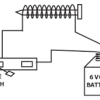
How Do We Convert Electrical Energy into Mechanical Energy?
Source Institutions
In this activity, learners make an electromagnet motor to demonstrate the most basic method of changing electrical energy into mechanical energy.

Marshmallow Catapult
Source Institutions
In this activity, learners explore physics by building a catapult that launches marshmallows with household objects.
The Shadow Knows II
Source Institutions
In this activity, learners will measure the length of a shadow and use the distance from the equator to calculate the circumference of the earth.

Manufacturing Technologies: Making a Picture Frame
Source Institutions
Learners examine the manufacturing process while they make picture frames from cereal boxes.
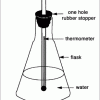
Using Solar Energy
Source Institutions
In this activity, learners discover how solar energy can be used to heat water.
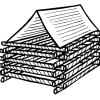
Three Little Pigs Construction Company
Source Institutions
In this activity about problem-solving, learners build a house for the Three Little Pigs using twenty straws and two index cards.
Static Spoons
Source Institutions
In this physics activity (page 6 of the PDF), learners will explore how static electricity affects surrounding objects.
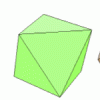
Solidly Platonic
Source Institutions
In this activity, learners follow simple directions to explore and create platonic solids.
Mapping Greenhouse Gas Emissions Where You Live
Source Institutions
In this lesson plan, learners examine some of the of greenhouse gas emissions sources in their community.
Why Does the Moon Have Phases?
Source Institutions
In this activity, learners use a simple 3D model to discover why the Moon has phases.
Geothermal Power Plant Model
Source Institutions
In this activity, learners make a model of a power plant that uses steam. Learners use simple materials like foil, a tin can, and a pot of water to model a geothermal power plant.
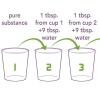
Sniffing for a Billionth
Source Institutions
This is an activity (located on page 4 of the PDF under What's Nano? Activity) about size and scale.
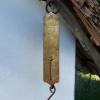
Hanging Around
Learners investigate weight by building a spring scale. They observe and record how it responds to objects with different masses.
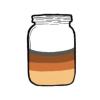
Soil Density
Source Institutions
In this activity, learners will test soil content using their sample, some water and a container that seals.
Make Matt's Coder/Decoder
Source Institutions
In this Cyberchase activity, learners make decoders to send and receive secret messages. Learners make the device out of two 8-ounce cups and two code strips.
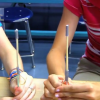
Stretch Your Potential
Source Institutions
In this activity, learners create a toy that demonstrates the First Law of Thermodynamics or the Law of Conservation of Energy.
What Counts in Bounce
Source Institutions
In this activity learners compare the bounciness of warm and cold racquetballs to see if temperature makes a difference in how well they bounce.
Playtime Paint
Source Institutions
In this activity on page 9 of the PDF, learners make their own paint using chalk as a pigment and glue and water as binders. This activity introduces learners to special mixtures called suspensions.