
Search Results
Showing results 2101 to 2120 of 2164
Number of Mentos vs. Height: Soda Geyser Series #5
Source Institutions
In this activity, learners conduct a controlled experiment to examine how many Mentos are needed to make the tallest possible soda geyser.
Drop IT!: Depth Perception
Source Institutions
These two activities (4th on the page) demonstrate the importance of two eyes in judging depth.
Ready to Observe: Enhance Your Telescope Experience
Source Institutions
This fun hands-on astronomy activity uses a variety of simple props to help learners understand why they see what they see in a telescope.
Filtering
Source Institutions
Make a quick and easy filter from household materials. A filter will catch any solids suspended in a liquid and filter them out. By using a filter, learners can discover amazing things.
Seeing in the Dark
Source Institutions
In this activity (17th on the page), learners investigate why you cannot see colors in dim light.
Accommodating Accommodation
Source Institutions
In this demonstration (18th on the page), learners conduct a simple test to explore how the cornea refracts light, which is further bent by the eye lens through a process known as accommodation.
Rutherford's Enlarged: A Content-Embedded Activity to Teach about Nature of Science
Source Institutions
This paper describes a working-model demonstration of Ernest Rutherford's 1911 experiment about the nature of atoms.
Make a Comet Model and Eat It!
Source Institutions
In this activity, learners build models of comets, using edible materials, to learn about comets' structure.
Shifting Backgrounds, Shifting Images
Source Institutions
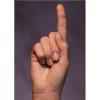
In this quick activity/demonstration (5th on the page), learners explore depth perception.
Soda Brand vs. Height Experiment: Soda Geyser Series #4
Source Institutions
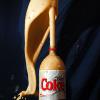
In this activity, learners conduct a controlled experiment to examine which brand of soda makes the best (highest) soda geyser.
Survival of the Fittest: Battling Beetles
Source Institutions
This guided inquiry three-part activity engages learners in thinking about the mechanism of natural selection through data collection and pattern recognition.
Rhythm Painting
Source Institutions
In this activity, early learners create paintings by making music and rhythm. Learners place paper in cans, add paint-soaked beans (or pebbles) and put the tops on.
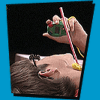
Drinking Straw Pulse Measurer
Source Institutions
In this health activity, learners create a device so that they not only feel their heartbeat, but also see it, using a straw and some clay.
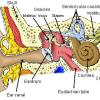
Model Eardrum
Source Institutions
In this activity (last activity on the page), learners make a model of the eardrum (also called the "tympanic membrane") and see how sound travels through the air.
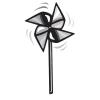
Magnet Powered Pinwheel
Source Institutions
Learners use the current flowing in a wire to create a magnetic field that turns a magnet. Learners can use this property of electromagnetism to build a magnet-powered pinwheel.
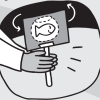
Thaumatrope
Source Institutions
In this activity, learners make an optical illusion toy from the 1800s to explore persistence of vision.
Something is Different about You
Source Institutions
In this activity, learners use various dress-up or costume pieces to play a game of change.
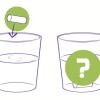
Cave in a Cup
Source Institutions
In this activity (page 2 of PDF under GPS: Cave Swallows Activity), learners will model how caves are formed by placing one piece of chalk in a cup of vinegar and another piece in a cup of water, then
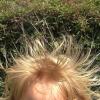
Static Cling
Source Institutions
In this activity, learners investigate static electricity using everyday objects at four different stations.
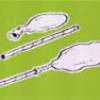
Blimp Jet Challenge
Source Institutions
In this design challenge activity, learners add a jet-propulsion system (i.e. a balloon) to a blimp so it flies straight and far under its own power.