
Search Results
Showing results 1 to 20 of 25
Fun with Bernoulli
Learners conduct four simple experiments to demonstrate the effects of air pressure.

A Merry-Go-Round for Dirty Air
Learners build a model of a pollution control device--a cyclone. A cyclone works by whirling the polluted air in a circle and accumulating particles on the edges of the container.

How can Clouds Help Keep the Air Warmer?
Source Institutions
In this activity, learners explore how air warms when it condenses water vapor or makes clouds.
Exploring Moisture on the Outside of a Cold Cup
Source Institutions
In this activity, learners explore the relationship between cooling water vapor and condensation. Learners investigate condensation forming on the outside of a cold cup.
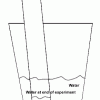
Percentage of Oxygen in the Air
Source Institutions
In this activity, learners calculate the percentage of oxygen in the atmosphere by using steel wool's ability to rust.
Dripping Wet or Dry as a Bone?
Learners investigate the concept of humidity by using a dry and wet sponge as a model. They determine a model for 100% humidity, a sponge saturated with water.
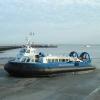
Hover Cup
Source Institutions
Is this activity concentrating on physical science, learners build their very own miniature hovercraft out of a paper cup. Using it, they can explore the concepts of friction and force.
Hot Stuff!: Investigation #1
Learners test two jars, one containing plain air and one containing carbon dioxide gas, to see their reactions to temperature changes.
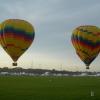
Convection Demonstration
Source Institutions
In this quick activity (located on page 2 of the PDF under GPS: Balloon Fiesta Activity), learners will see the effects of convection and understand what makes hot air balloons rise.
Hot Stuff!: Investigation #4
Learners test two jars containing soil, one covered and one open, for changes in temperature. After placing the jars in the Sun, learners discover that the covered jar cools down more slowly.

Hot Stuff!: Investigation #2
Learners test two jars containing hot water, one covered with plastic and one open, for changes in temperature.

Paper Drop Design Competition
Source Institutions
Using paper, paper clips, an index card, and tape, teams of learners design flying devices to (1) stay in the air as long as possible and (2) land as close as possible to a given target.
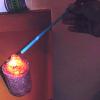
Hot Stuff!: Investigation #3
Learners test two jars of ice water, one covered and one open, for changes in temperature. After placing the jars in the sun, learners discover that the covered jar cools down more slowly.
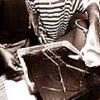
Squeeze the Stream
Source Institutions
In this activity related to flight, learners build a tiny stream channel to investigate how fluids (air and water) change speed as they flow between and around objects.

Clues About Clouds
Source Institutions
In this weather activity which requires adult supervision, learners will get a chance to make a cloud right here on Earth!
Frosty Glasses
Source Institutions
In this activity, learners explore why frost forms. They create their own frost using a solution of ice water and salt in a glass.

"Boyle-ing" Water
Source Institutions
In this activity, learners explore Boyle's Law and discover that water will boil at room temperature if its pressure is lowered.
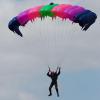
Blow-and-Go Parachute
Learners make a skydiver and parachute contraption and launch it. They see that the drag created by air resistance slows the descent of skydivers as they travel back to Earth.
Float Your Boat
Source Institutions
In this physics activity, learners will explore buoyancy.
Why is the Sky Blue?
Source Institutions
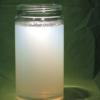
In this activity, learners use a flashlight, a glass of water, and some milk to examine why the sky is blue and sunsets are red.