
Search Results
Showing results 81 to 94 of 94
Animal House
Source Institutions
The goal of this activity is to design, build and test a house or toy for an animal.
Paint by the Numbers
Source Institutions
In this pencil and paper activity, learners work in pairs and simulate how astronomical spacecraft and computers create images of objects in space.
Zipline
Source Institutions
In this design activity, learners create a vehicle that can transport a load, like a favorite toy or as a recycled object, from the top of a zipline to the bottom using only gravity.
Sound Off!
Source Institutions
This activity includes several games about animal sounds. Using their sense of hearing and communicating with various kinds of noisemakers, learners role-play predator and prey.
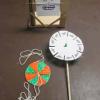
Spinning Illusions
Source Institutions
In this activity, learners construct three optical illusion toys to examine how our brains play tricks on what we see.
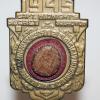
Secret Writing Devices
Source Institutions
In this activity about encryption, learners cut out a secret decoder badge from a handout and use it to encode messages to each other.
Cycles in the Cards
Source Institutions
In this "game," learners explore and relate the evolution of stars to a Navajo creation story. The story is written on a series of cards, which are laid on a table as the story is told.
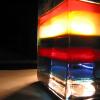
Density Rainbow and the Great Viscosity Race
Learners conduct two activities to investigate two properties of liquids: density and viscosity. In a clear container, learners stack 7 different liquids which will layer according to their density.
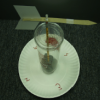
Design and Build a Wind Vane
Source Institutions
In this activity, learners design and build a simple wind vane —one of the oldest kinds of weather tools— and use it to show wind direction.
Benham's Disk
Source Institutions
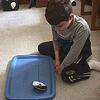
In this activity, learners make a Benham Top to explore visual illusions and optics.
Building with Wonderful Junk
Source Institutions
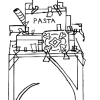
In this activity (page 4), learners work in groups to plan and build large structures using recyclable materials they have brought from home.
Double or More
Source Institutions
Choose a recipe to double (or triple, quadruple, or halve). Show everyone the recipe and engage them in figuring out: How much will we need to increase the recipe to feed everyone?
Chromatography Can Separate!
Source Institutions
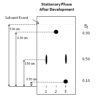
In this chemistry activity, learners use thin layer chromatography to determine the molecular composition of different markers.
Exploring Strange New Worlds
Source Institutions
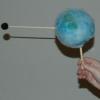
This fun and simple hands-on astronomy activity lets learners explore model planets (that they or an educator will create), using methods NASA scientists use to explore our Solar System.