
Search Results
Showing results 61 to 78 of 78
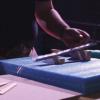
Chain Reaction II
Source Institutions
In this hands-on activity, learners use an assortment of (mainly household) items to complete Rube Goldberg-type challenges.
The Desert Blooms!
Source Institutions
This activity attempts to clear up the common misconception that deserts are always hot, totally dry, and uninhabitable.
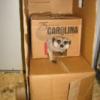
Animal House
Source Institutions
The goal of this activity is to design, build and test a house or toy for an animal.

Polymers are Chains (K-2)
Source Institutions
In this activity, learners make a paper model of a polymer, then make Silly Putty, an actual polymer.
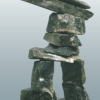
Survivors! The People of the Arctic
Source Institutions
In this activity, learners use maps to locate the Arctic region and use a word game to discover the types of resource people need to survive in the extreme climate.
Eye Spy
Source Institutions
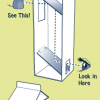
This fun activity uses simple materials such as milk cartons and mirrors to introduce the ideas of optics and visual perception.
Zipline
Source Institutions
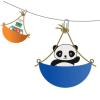
In this design activity, learners create a vehicle that can transport a load, like a favorite toy or as a recycled object, from the top of a zipline to the bottom using only gravity.
Copper Cleanup
Source Institutions
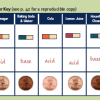
In this hands-on experiment, kids use chemistry to explore whether acids or bases are better at restoring a penny’s shine.
Spinning Illusions
Source Institutions
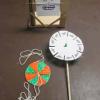
In this activity, learners construct three optical illusion toys to examine how our brains play tricks on what we see.
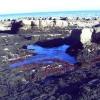
Tidepool in the Classroom
Source Institutions
In this activity (page 4 of the pdf), learners build a model of a tide pool, using chicken wire, paper mache, and other craft materials.
Three Little Pigs
Source Institutions
In this activity, leaners explore building techniques by recreating the story of The Three Little Pigs.
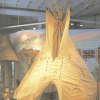
Where the Buffalo Roam
Source Institutions
In this activity, learners explore the Great Plains.
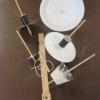
Tops
Source Institutions
In this activity, learners discover that some things only stand up while they are spinning.
Digging Deeper!
Source Institutions
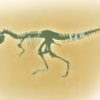
In this activity, learners explore dinosaur skeletons and anatomy. Learners make observations about a T. rex skeleton diagram and then measure the skeleton length and width.
Chromatography Can Separate!
Source Institutions
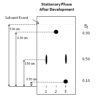
In this chemistry activity, learners use thin layer chromatography to determine the molecular composition of different markers.
If You Lived in a Forest
Source Institutions
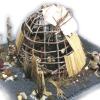
This activity encourages learners to focus on the natural environment of the Eastern Woodlands before the arrival of European settlers.
Designing a Wall
Source Institutions
In this engineering activity (page 5 of PDF), young learners investigate how materials and design contribute to the strength of a structure, particularly walls.
Coral, Carbon Dioxide and Calcification
Source Institutions
In this group activity, learners act out key stages of the "ocean carbon cycle" (also known as the "carbonate buffer system") through motions, rearranging blocks and team tasks.