
Search Results
Showing results 301 to 320 of 484
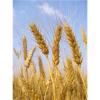
Wheat Germ DNA Extraction
Source Institutions
This laboratory exercise is designed to show learners how DNA can easily be extracted from wheat germ using simple materials.
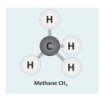
Let's Make Molecules
Source Institutions
In this activity, learners use gumdrops and toothpicks to model the composition and molecular structure of three greenhouse gases: carbon dioxide (CO2), water vapor (H2O) and methane (CH4).
M&M's in Different Sugar Solutions
Source Institutions
In this activity, learners investigate whether having sugar already dissolved in water affects the speed of dissolving and the movement of sugar and color through the water.
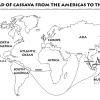
Green Travelers
Source Institutions
In this activity (on pages 23-29), partners use the Plant Traveler Cards, along with a world map and map worksheets, to follow plants such as cassava, chocolate and coffee that grew first in one part
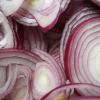
Onion DNA Extraction
Source Institutions
This laboratory exercise is designed to show learners how DNA can easily be extracted from onion cells using simple materials.
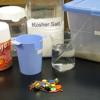
Mixtures and Solutions
Source Institutions
This activity was designed for blind learners, but all types of learners can use it to investigate heterogeneous and homogeneous mixtures and solutions, identify the differences, and explore the conce
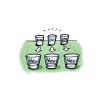
Dissolving Different Liquids in Water
Source Institutions
In this activity, learners add different liquids to water and apply their working definition of “dissolving” to their observations.
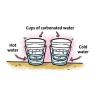
Temperature Affects the Solubility of Gases
Source Institutions
In this activity, learners heat and cool carbonated water to find out whether temperature has an effect on how fast the dissolved gas leaves carbonated water.
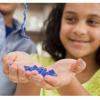
Exploring Fabrication: Gummy Capsules
Source Institutions
In this activity, learners make self-assembled polymer spheres.
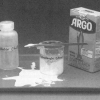
Starch Slime
Source Institutions
Learners mix liquid water with solid cornstarch. They investigate the slime produced, which has properties of both a solid and a liquid.
Scent Tag
Source Institutions
In this matchmaking activity (on page 2 of the PDF under GPS: Animal Scent Activity), learners will each have a scented cotton ball taped to their shoulder. The scent (e.g.
Fungus Among Us
Source Institutions
In this environmental health activity, learners grow and observe bread mold and other kinds of common fungi over the course of 3-7 days.
Everyday Poisons
Source Institutions
This reading and writing activity (on pages 2-9) teaches what plant parts should be avoided, how a person can get rid of toxins, symptoms of plant poisoning, and how plants create poisons to repel pre
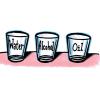
Dissolving a Substance in Different Liquids
Source Institutions
In this activity, learners make colored sugar and add it to water, alcohol, and oil to discover some interesting differences in dissolving.
Making Sodium Acetate: Hot Ice
Source Institutions
In this chemistry activity which should only be done under adult supervision (page 10 of the PDF), learners will create an exothermic process by making Sodium Acetate.

Soda Geyser
Source Institutions
In this quick activity (page 1 of PDF under SciGirls Activity: Lift Off), learners will use the ever-popular soda geyser experiment to test the reactivity of the various sugar candies or mints.
Exploring Structures: DNA
Source Institutions
In this activity, learners create a necklace of wheat germ DNA. Learners add alcohol to wheat germ so that the DNA clumps together.
Capturing Carbon Dioxide
Source Institutions
In this activity, learners investigate carbon sequestration by creating a carbonated beverage out of apple juice and dry ice.
Bridge the Gap
Source Institutions
Learners work in groups to construct bridges using stale marshmallows and toothpicks.
Milk Plastic
Source Institutions
In this activity, learners transform everyday milk into small plastic figurines and jewelry. Use this activity to introduce learners to monomers and polymers.