
Search Results
Showing results 41 to 60 of 61
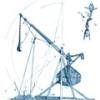
Trebuchet Toss
Source Institutions
In this activity, learners explore trebuchet design. Teams of learners construct trebuchets from everyday materials.
Interactive Gumball Machine
Source Institutions
In this activity, learners review the history of gumball machines and explore potential and kinetic energy, while working in teams to build a gumball slide.
Shipwrecked!
Source Institutions
In this activity, learners are challenged to design and build the tools they need to survive being shipwrecked on a deserted island.
Jell-O Model of Microfluidics
Source Institutions
This activity uses Jell-O(R) to introduce learners to microfluidics, the flow of fluids through microscopic channels.
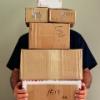
Shipping for Survival
Source Institutions
In this activity, learners explore how packaging engineers develop customized shipping and packaging containers to meet the needs of many different industries.
Making Connections: What You Can Do To Help Stop Global Climate Change
Source Institutions
In this cooperative learning activity, learners visit ten stations and are challenged to think critically about various conservation questions and issues.
DNA Nanotechnology
Source Institutions
In this activity, learners explore deoxyribonucleic acid (DNA), a nanoscale structure that occurs in nature.
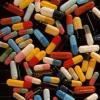
Gelatin Used for Drug Delivery
Source Institutions
In this activity, learners discover how gelatin can be used as a medium for drug delivery. Learners create colored gelatin and then cut out pieces of the gelatin to simulate medicine (pills).
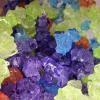
Edible Glass
Source Institutions
In this activity, learners discover the principles of edible glass by making a supersaturated sugar solution.
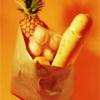
Design and Build a Better Candy Bag
Source Institutions
In this activity, learners explore how product design differences can affect the success of a final product -- in this case a bag for holding candy.
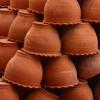
Pot-in-Pot Refrigeration
Source Institutions
In this activity (on page 2 of PDF), learners create a low-tech refrigerator that requires no electricity to keep food from spoiling.
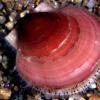
The Scoop on Scallops
Source Institutions
In this data analysis activity, learners quantify the abundance and distribution of sea scallops in and adjacent to the Mid-Atlantic closed areas.
Keep it Cool
Source Institutions
In this activity, learners explore how engineers have met the challenge of keeping foods, liquids, and other items cool.

Starch Breakdown
Source Institutions
Learners use Benedict’s solution and heat to test for the presence of simple sugars in glucose, sucrose, starch, and starch combined with amylase.
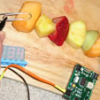
Fruit Xylophone: Fruit Salad Instrument of the Future!
Source Institutions
This is a perfect summertime lunch activity! Pico Cricket is required (micro controller). First, get a bunch of cut up fruit, line them up, then plug a piece of fruit with a Pico Cricket sensor clip.
Make a Comet Model and Eat It!
Source Institutions
In this activity, learners build models of comets, using edible materials, to learn about comets' structure.
Build Your Own Solar Oven
Source Institutions
Learners follow directions to construct a solar oven that really cooks! The solar oven uses aluminum foil to reflect sunlight into a cooking chamber, which is painted black.
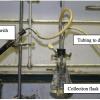
Investigating and Using Biomass Gases
Source Institutions
In this activity, learners will be introduced to biomass gasification and will generate their own biomass gases.
Herbal Medicines
Source Institutions
In this open-ended multicultural lab activity, learners investigate the effectiveness of herbal remedies.
Making An Impact!
Source Institutions
In this activity (on page 14 of PDF), learners use a pan full of flour and some rocks to create a moonscape.