
Search Results
Showing results 1 to 20 of 26
Whatta Web
Source Institutions
In this activity, learners play a game to simulate the food chain.
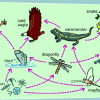
What's for Dinner?
Source Institutions
In this activity (page 5 of the PDF), learners will create a food web and explore food sources for different organisms. They will identify relationships between organisms in an ecosystem.
Quick Frozen Critters
Source Institutions
In this activity, learners play an active version of freeze tag based on predator/prey relationships.
Acorns
Source Institutions
In this outdoor game, learners play the roles of gray or red squirrels gathering and storing a supply of food in "fall" and recovering enough of them to survive the "winter." Learners carry bags repre
Food Grab
Source Institutions
In this outdoor activity, learners design devices that will catch prey or gather plants.
Grabbing a Bite to Eat
Source Institutions
In this activity, learners perform an experiment that replicates the dilemma faced by birds in acquiring food from a confined area.
Flocking for Food
Source Institutions
In this outdoor beach activity, learners use a variety of "beaks" (such as trowels, spoons or sticks) to hunt for organisms that shore birds might eat.
Deer Me: A Predator/Prey Simulation
Source Institutions
In this activity, learners will simulate the interactions between a predator population of gray wolves and a prey population of deer in a forest.
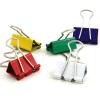
Clipbirds
Source Institutions
In this simulation of natural selection, learners use binder clips in three different sizes to represent the diversity of beak sizes in a bird population.
Population Game
Source Institutions
In this outdoor game, learners simulate a herd of deer trying to survive in an area called the "home range." Learners explore the concept of "carrying capacity"—what size population of an organism can
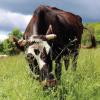
Sustainable Grazing
Source Institutions
In this activity, learners investigate the food, water, and space needs of common livestock animals.
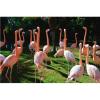
Feeding Facilitation: A Lesson in Evolution and Sociobiology
Source Institutions
This is an outdoor activity designed to demonstrate evolution of feeding behavior in flocking, schooling or herding animals that maximizes allocation of food resources and enhances survival.
An Interdisciplinary Deer and Human Population Study
Source Institutions
This activity helps the learner answer the question: "What environmental problems arise due to animal and human overpopulation and what might need to be done to combat these problems?" Learners play a
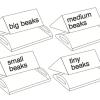
Clippy Island: An Investigation into Natural Selection
Source Institutions
In this activity, leaners will observe the process of natural selection on a population of birds called 'Springbeaks' over four seasons of breeding on an isolated environment called 'Clippy Island.' L

Bird Beaks
Source Institutions
In this activity, learners investigate different types of bird beaks using household items which mimic different beak examples.
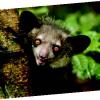
Aye-Aye
Source Institutions
This is an activity about the adaptations that allow the Aye-aye to survive in its habitat. Learners will explore how the Aye-aye collects food and how this is influenced by their specialized finger.

Shape Up!
Source Institutions
In this activity (25th on the page) about learning and memory, learners explore a training method that animal trainers employ called "shaping." Working in pairs, learners will attempt to "shape" each
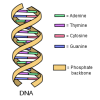
Close, Closer, Closest
Source Institutions
In this activity, learners perform an experiment that models a chromatography-like process called electrophoresis, a process used to analyze DNA.
Salt Water Revival
Source Institutions
In this outdoor activity, learners visit the intertidal zone of a rocky coastal site well populated with marine organisms.
Leaf Living
Source Institutions
In this outdoor fall activity, learners find out what living in or under a layer of leaves is like.