
Search Results
Showing results 81 to 100 of 116
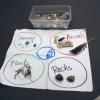
Beach Buckets
Source Institutions
In this activity, learners explore a bucket of sand and beach objects.
Invent an Animal
Source Institutions
In this outdoor activity and game, learners explore how animals adapt for survival through coloration, markings and camouflage.
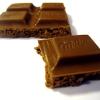
Melts in Your Bag, Not in Your Hand
Source Institutions
In this activity, learners use chocolate to explore how the Sun transfers heat to the Earth through radiation.
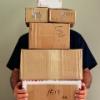
Shipping for Survival
Source Institutions
In this activity, learners explore how packaging engineers develop customized shipping and packaging containers to meet the needs of many different industries.
Making Connections: What You Can Do To Help Stop Global Climate Change
Source Institutions
In this cooperative learning activity, learners visit ten stations and are challenged to think critically about various conservation questions and issues.
Scavenger Hunt
Source Institutions
An outdoor scavenger hunt helps learners consider the theme of "What Is Life?" Learners explore what living organisms are, including how organisms meet basic needs of food, shelter and water to surviv
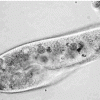
Observing Different Microbes
Source Institutions
In this activity, learners use a microscope to examine three different microbes: bacteria, yeast and paramecia. Educator will need to prepare the yeast solution one day before the activity.
Mystery Marauders
Source Institutions
In this outdoor, mystery-solving activity, learners work like detectives, gathering evidence to identify the culprits that are attacking plants.
Leaf Living
Source Institutions
In this outdoor fall activity, learners find out what living in or under a layer of leaves is like.
Bone Identification
Source Institutions
This activity (page 3 of the PDF under SciGirls Activity: Dinosaurs) is a full inquiry investigation into fossil hunting and identification.
The Scoop on Scallops
Source Institutions
In this data analysis activity, learners quantify the abundance and distribution of sea scallops in and adjacent to the Mid-Atlantic closed areas.

A Funny Taste
Source Institutions
In this activity, learners explore the different salinities of various sources of water by taste-testing.
Variation Game
Source Institutions
In this set of outdoor games, learners play the role of monkeys that are trying to get enough resources (food, shelter, and space) to survive.
Statistics: Something Fishy
Source Institutions
In this math lesson, learners apply the concepts of ratio and proportion to the capture-recapture statistical procedure.
Build a Coral Polyp
Source Institutions
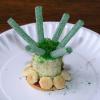
In this activity, learners build one or more edible coral polyps and place them together to form a colony.

Avogadro's Bubbly Adventure
Source Institutions
In this activity on page 7 of the PDF, learners investigate the solubility of gas in water at different temperatures. This experiment will help learners determine if temperature affects solubility.

Chilean Sea Bass: Off the Menu
Source Institutions
In this data analysis activity, learners use data collected by the Commission for the Conservation of Antarctic Marine Living Resources (CCAMLR) to study Chilean sea bass populations.
Finding Fossils
Source Institutions
This activity (located on page 4 of the PDF under GPS: Baby Dinosaurs Activity) is a full inquiry investigation to determine the age of fossils based on where they are discovered.
Leaves: Extracting Pigments
Source Institutions
In this fun, hands-on autumn activity, learners experiment to discover whether the colored substances in leaves can be separated from the leaves.
Plant Parts and Their Diseases
Source Institutions
This exercise is designed to teach young learners the different parts of a plant (root, stems, leaves, flowers, fruit, and seeds), the basic functions of each part, and to show that tiny microscopic o