
Search Results
Showing results 1 to 20 of 43
Mold Terrarium: What Grows on Leftover Food?
Source Institutions
This activity shows you how to make a mold terrarium using a jar and leftover food.
Try Growing Your Own Mold
Source Institutions
This is a hands-on activity that uses bread and household materials to grow mold. Learners collect dust from a room, wipe it on food, and contain it. One to seven days later, mold has grown.
Ziploc Digestion Simulator
Source Institutions
In this biology activity, learners recreate the process of digestion in a zip lock bag. A bit of soda pop added to some crumbled crackers approximates how acids in the stomach dissolve food.
Chemical Reactions in Your Mouth
Source Institutions
In this chemistry activity (page 5 of the PDF), learners will see that chewing is more than just the crushing up of food; there is actually a chemical change going on at the same time.
Bendy Bones
Source Institutions
In this activity (on pages 19-24 of PDF), learners soak chicken bones or eggshells in vinegar for several days.
Defining Dissolving
Source Institutions
In this introductory activity, learners discover that sugar and food coloring dissolve in water but neither dissolves in oil.

Static Shock!
Source Institutions
In this hands-on activity, learners explore static electricity through the use of common household products. They also explore the connection between static electricity and cold weather.
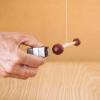
Repulsive Grape: Diamagnetism
Source Institutions
Do grapes, yes the grapes from the grocery store, move in the presence of a very strong magnet?
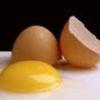
Egg-stra Strength
Source Institutions
In this physics activity, learners will investigate the strength of egg shells.
Growing Rock Candy
Source Institutions
In this activity, learners make their own rock candy. Crystals will grow from a piece of string hanging in a cup of sugar water. The edible crystals may take up to a week to form.
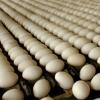
Take an Egg for a Spin
Source Institutions
This is an activity about friction as well as kinetic and potential energy.

Rock Candy
Source Institutions
In this yummy chemistry activity which requires adult supervision, learners use sugar and water to explore how crystals form.
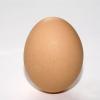
Eggshell Inertia
Source Institutions
In this physics activity (page 14 of the PDF), learners gain a better understanding of how friction and mass affect objects by comparing the rotational inertia of raw and hard-boiled eggs.
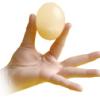
Experimenting with Naked Eggs
Source Institutions
In this activity about osmosis, learners use a naked egg (one with a dissolved eggshell) to learn about selectively permeable membranes.

Geyser
Source Institutions
This Exploratorium activity can be used in many contexts because geysers are great opportunities for learning about heat and temperature changes as well as geological/space science phenomena.
Exploring Baking Powder
Source Institutions
In this activity, learners examine baking powder, a combination of three powders: baking soda, cream of tartar, and cornstarch.
Rate of Solution Demonstration
Source Institutions
In this chemistry demonstration, learners investigate the factors that increase the rate of dissolution for a solid.
Are you a Supertaster?
Source Institutions
In this activity, learners examine their tongue and taste buds.
Neutralizing Acids and Bases
Source Institutions
Learners use their knowledge of color changes with red cabbage indicator to neutralize an acidic solution with a base and then neutralize a basic solution with an acid.
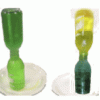
Inverted Bottles
Source Institutions
In this activity, learners investigate convection by using food coloring and water of different temperatures.