
Search Results
Showing results 281 to 300 of 306
Make a Comet Model and Eat It!
Source Institutions
In this activity, learners build models of comets, using edible materials, to learn about comets' structure.
Fruit Fly Trap
Source Institutions
Build a fruit fly trap out of a 2-liter plastic bottle and some rotten fruit! Fruit flies are easy to catch in warm weather. Once you catch some, you will be able to see their life cycle up-close.
Hot Stuff!
Source Institutions
In this activity, learners discover that sand is the major ingredient in glass.

Density Rainbow
Source Institutions
In this activity, learners mix several sugar solutions to investigate the property of density. Each sugar solution has a different density and color of the rainbow.
Exploring at the Nanoscale
Source Institutions
This lesson focuses on how nanotechnology has impacted our society and how engineers have learned to explore the world at the nanoscale.
We all Scream for Ice Cream
Source Institutions
In this activity, learners observe how salinity affects the freezing point of water by making and enjoying ice cream.
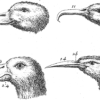
Bird Beak Buffet
Source Institutions
In this classic activity, learners investigate natural selection by becoming birds foraging for food on an island.
I Can't Take the Pressure!
Learners develop an understanding of air pressure in two different activities.
DNA Extraction
Source Institutions
Learners use a simple process to extract DNA from strawberries.
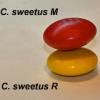
Survival of the Fittest: Variations in the Clam Species Clamys sweetus
Source Institutions
This guided inquiry three-part activity engages learners in thinking about the mechanism of natural selection by encouraging them to formulate questions that can be answered through scientific investi

Disappearing Colors
Source Institutions
In this challenge, learners figure out how to make a juice stain disappear.
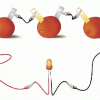
Electricity: Fruit Batteries
Source Institutions
In this activity, learners create a battery from fruit. This activity helps learners explore electricity, electrochemistry, and series circuits as well as the process of scientific inquiry.
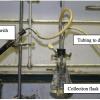
Investigating and Using Biomass Gases
Source Institutions
In this activity, learners will be introduced to biomass gasification and will generate their own biomass gases.
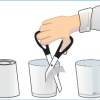
Cleaning Water with Dirt
Source Institutions
In this activity on page 7 of the PDF (Water in Our World), learners make their own water treatment systems for cleaning water.
Homework, Hogwarts Style
Source Institutions
In this activity on page 8 of the PDF (Behind the Scenes with Chemistry), learners make three of Harry Potter's essential school supplies: quills, ink, and color-changing paper.
Wintergreen
Source Institutions
In this outdoor, winter activity, learners find living green plants under the snow and determine the light and temperature conditions around the plants.
Demonstrating An Epidemic
Source Institutions
This experiment allows learners to experience a small scale "epidemic," demonstrating the ease with which disease organisms are spread, and enables learners to determine the originator of the "epidemi
Survival of the Fittest: Battling Beetles
Source Institutions
This guided inquiry three-part activity engages learners in thinking about the mechanism of natural selection through data collection and pattern recognition.

Corals on Acid
Source Institutions
The objective of this inquiry-based lesson is for learners to gain an understanding of how increasing ocean acidity can affect the calcification of marine organisms.
Tobacco Mosaic Virus
Source Institutions
In this four-part laboratory exercise, learners investigate properties of Tobacco mosaic virus (TMV) including (1) symptoms induced by the virus in susceptible plants at the macroscopic and microscopi