
Search Results
Showing results 21 to 40 of 53
Gravity Fail
Source Institutions
In this activity, learners try pouring water out of a regular cup and a miniature cup. It’s harder than it sounds! Learners discover that different forces dominate at different size scales.
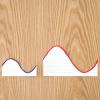
Soap-Film Interference Model: Get on our wavelength!
Source Institutions
By making models of light waves with paper, learners can understand why different colors appear in bubbles.
Amazing Marshmallows
Source Institutions
In this demonstration, learners observe the effects of air pressure. They will watch as marshmallows inside a bottle expand as a vacuum pump removes air from the bottle.
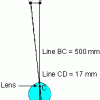
Measuring Your Blind Spot
Source Institutions
In this activity, learners calculate the width (horizontal diameter) of the blind spot on their retina. Learners make a blind spot tester using a piece of notebook paper.

Ready, Set, Fizz!
Source Institutions
In this activity, learners explore the chemical reaction between water and effervescent antacid tablets. This hands-on activity models how a material can act differently when it's nanometer-sized.
Modeling the Night Sky
Source Institutions
In this two-part activity, learners explore the Earth and Sun's positions in relation to the constellations of the ecliptic with a small model.
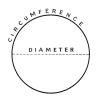
Pi Graph
Source Institutions
In this activity, learners use a straight line to learn about circles. Learners measure and record the diameter and circumference of different sized cylindrical objects on a chart.
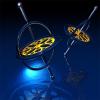
Super Spinners
Learners build at least two different spinners (tops) to investigate how mass distribution, size, and shape affect the length of time the spinner spins.
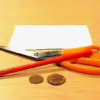
Shrinking Coin
Source Institutions
In this demonstration, learners attempt to get a large coin through a small hole, the size of a smaller coin.
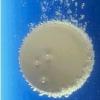
Exploring Properties: Surface Area
Source Institutions
This hands-on activity demonstrates how a material can act differently when it's nanometer-sized.

Perspectives: Powers of 10
Source Institutions
In this activity, learners complete a series of drawing activities to explore scale and powers of 10. Learners first trace each other on 1-meter-square pieces of paper.
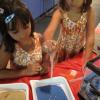
Sand, Plants and Pants
Source Institutions
In this activity, learners explore how the application of nano-sized particles or coatings can change a bigger material’s properties.
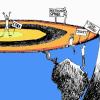
Earth Walk
Source Institutions
In this hands-on and feet-on excursion, learners take a science walk to visualize the planet's immense size and numerous structures, without the usual scale and ratio dimensions found in most textbook
Diffraction Between Wax Blocks
Source Institutions
In this optics activity, learners explore diffraction by adding wax blocks to a ripple tank. The wedge-shaped blocks act as obstacles that the wave must bend around.
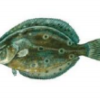
Ocean Home: Swimming Fishes
Source Institutions
In this activity, learners model, on a human-sized board game, how changes in water temperature may affect fish distributions and, ultimately, fisheries.
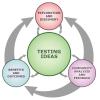
Poking Around: Having Students Experience the Real Process of Science
Source Institutions
Using indirect methods, learners determine the shape and size of a piece of carpet hidden under a piece of plywood.
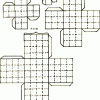
Modeling Limits to Cell Size
Source Institutions
This investigation provides learners with a hands-on activity that simulates the changing relationship of surface areas-to-volume for a growing cell.

Energy Use in the Americas
Source Institutions
Learners explore the relationship between energy consumption, population, and carbon emissions in the countries of the Americas.
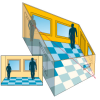
Special Effects: Titanic and Beyond
Source Institutions
In this activity, learners investigate how geometry plays a role in perspective.