
Search Results
Showing results 41 to 60 of 75
Static Cling
Source Institutions
In this activity, learners investigate static electricity using everyday objects at four different stations.
Exploring Properties: Surface Area
Source Institutions
This hands-on activity demonstrates how a material can act differently when it's nanometer-sized.
Meteoroids and the Craters They Make
Source Institutions
In this activity, learners investigate the formation of craters. Learners will examine how the size, angle and speed of a meteorite's impact affects the properties of craters.
Super Sounding Drum
Source Institutions
In this activity, learners construct drums out of everyday containers (like bowls or food containers) and shrink wrap. Learners use a hair dryer to affix and tighten the shrink wrap to the container.
Balloon Hovercraft
Source Institutions
In this activity (on page 2 of the PDF under GPS: Luge Activity), learners will construct a model hovercraft out of an empty spool and a piece of cardboard.
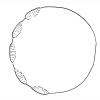
Elephant Foot
Source Institutions
Using a real-size sketch of a baby elephant's footprint, learners estimate, measure and record the width (diameter) and outside edge length (perimeter or circumference) of the footprint.
Earth Walk
Source Institutions
In this hands-on and feet-on excursion, learners take a science walk to visualize the planet's immense size and numerous structures, without the usual scale and ratio dimensions found in most textbook
Soup Can Derby
Source Institutions
In this activity (on page 2 of PDF under GPS: Roller Coaster Design Activity), learners will use food cans of many different properties (sizes, shapes, and weights) and set two cans on their sides at
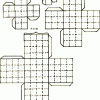
Modeling Limits to Cell Size
Source Institutions
This investigation provides learners with a hands-on activity that simulates the changing relationship of surface areas-to-volume for a growing cell.
Defining Density
Source Institutions
In this introductory demonstration and activity, learners are introduced to the concept of density as they explore a rock and a wooden block in water.
Atmospheric Collisions
Source Institutions
In this activity/demonstration, learners observe what happens when two ping pong balls are suspended in the air by a hair dryer. Use this activity to demonstrate how rain drops grow by coalescence.
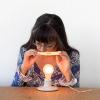
Pinhole Magnifier
Source Institutions
In this activity related to light and perception, learners use a pinhole in an index card as a magnifying glass to help their eye focus on a nearby object.
Feed the Birds
Source Institutions
Learners construct a bird feeder from re-used materials. After hanging their feeder, they keep a journal about what birds visit the feeder.
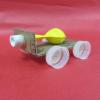
Balloon Car
Source Institutions
In this activity, learners explore force and motion by constructing cardboard cars that are propelled by balloons.
Sort It Out!
Source Institutions
In this activity, learners explore how engineers have developed sorting systems which integrate into manufacturing and packaging processes. Learners explore how coins are made.
Doughy Physics
Source Institutions
Learners drop two different masses of play dough and observe how long it takes them to hit the ground.
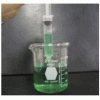
Sizing Up Temperature
Source Institutions
In this activity, learners explore Charles' Law in a syringe.
Soaring Towers: Building with Recycled Materials
Source Institutions
In this activity, learners will build the highest tower they can out of recycled materials.
Air Cannon
Source Institutions
In this activity (page 1 of PDF under SciGirls Activity: Forecasting), learners will construct an air cannon by cutting a hole in the bottom of a bucket and stretching a garbage bag over the other end
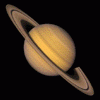
Build a Solar System
Source Institutions
In this activity, learners make a scale model of the Solar System and learn the real definition of "space." Learners use the online calculator to create an appropriate scale to use as a basis for thei