
Search Results
Showing results 1 to 8 of 8
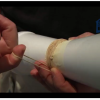
Make Your Own Magnus Glider
Source Institutions
Build a glider that uses the same physics as a curve ball, for less than a dime.
Pace-Off!
Source Institutions
In this math activity, learners use non-standard measurement (paces) to find the distance from one point to another. Learners practice estimating and measuring distances .
Balance Challenge
Source Institutions
In this quick activity, learners take a balance challenge to measure their average balance time. As they collect data, they investigate how practice and repetition improve their balance time.
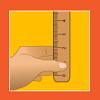
Reaction Time
Source Institutions
In this activity, learners explore reaction time and challenge themselves to improve their coordination. Do you want to move faster? Catch that ball that you never seem to see in time?

Stethoscope
Source Institutions
Make a copy of the first stethoscope with only a cardboard tube! René Laennec invented the first stethoscope in 1819 using an actual paper tube!
How Many In a Minute
Source Institutions
In this activity, learners will keep track of how much they can do in one minute. Instructors can pick something everyone will do for a minute, such as jumping up and down or drawing stars.
Catch the Beat
Source Institutions
This is an activity about music, movement, and math. Learners will start a rhythm pattern with 2, 3, or 4 beats. For instance, tap your foot, jump, clap, repeat.
Jump on Tens: Counting Fun
Source Institutions
Learners combine counting, multiples, and number patterns with jumping up and down. To start, pick a counting number.