
Search Results
Showing results 1 to 20 of 82

Tennis Anyone?
Source Institutions
In this activity, learners explore sports engineering and advanced materials development.
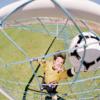
Ball Bounce Experiment
Source Institutions
In this activity, learners investigate the properties of different types of balls.
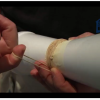
Make Your Own Magnus Glider
Source Institutions
Build a glider that uses the same physics as a curve ball, for less than a dime.

Hockey Stick Power!
Source Institutions
This activity (on page 2 of the PDF under SciGirls Activity: Hockey) is a full inquiry investigation into how a hockey stick’s flex affects shooting power and accuracy.
Hit the Spot!
Source Institutions
This is a hands-on activity about the physics of tennis. Learners will discover that physics plays a big part in tennis, no matter what their skill level might be.
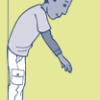
Throw Your Weight Around
Source Institutions
During this activity, learners take part in a variety of tasks which involve moving and balancing different body parts.
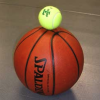
"Baseketball": A Physicist Party Trick
Source Institutions
This trick from Exploratorium physicist Paul Doherty lets you add together the bounces of two balls and send one ball flying.
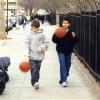
Mega Bounce
Source Institutions
In this outdoor activity (on page 2 of the PDF under GPS: Baseball Activity), learners will investigate the transfer of energy using sports equipment.

Batter Up!
Source Institutions
This activity (on page 3 of the PDF under GPS: Baseball Activity) is a full inquiry investigation into how "bounciness" relates to the distance a ball will fly when hit off a batting tee.
Super Bounce
Source Institutions
In this activity (on page 1 of the PDF under SciGirls Activity: Soccer Ball Kick), learners will investigate the transfer of energy using sports equipment.
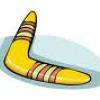
Boomerang
Source Institutions
Everybody loves boomerangs! In this activity about force and motion, the learners will experiment with boomerangs and explore how they work. This is a great activity to get learners up and moving.
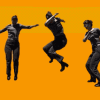
Mid-Air Maneuver: Skateboard Science
Source Institutions
To understand how skaters turn in midair, try this little experiment! Individuals can do this activity alone, but it works better with a partner.
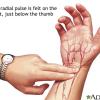
The Pulse of Gravity
Source Institutions
In this astronomy activity (page 3 of the PDF), learners will examine the effects of gravity on a person’s pulse and explore how gravity can differ from planet to planet.

Olympic Track Meet
Source Institutions
In this activity, learners discover how exercise helps keep the body healthy. Learners increase their heart rates by running and understand how running fast versus walking affects their pulse rates.

Boomerang
Source Institutions
Learners trace, cut out and fly a boomerang, outdoors or in a large indoor space.
Thrown For A Curve: Pitch Like A Big Leaguer
Source Institutions
You may have tried to throw a curveball or a slider, or even a screwball, with an ordinary baseball and found it difficult to do.
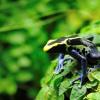
Frog Olympics
Source Institutions
Did you know that a bullfrog can jump a distance of 10 times its body length? Learn more about nature's most acrobatic amphibian, the frog, through this set of short, hands-on activities.
Strike 'em Down & Add 'em Up!
Source Institutions
In this activity, reuse two-liter bottles to create bowling pins. Learners practice math skills and develop a concept of verifying answers, while bowling and keeping score.
Just a Minute
Source Institutions
How much can you do in one minute? In this activity, learners estimate how many times a partner can complete a task (like writing their name or jumping jacks) in one minute.
Pace-Off!
Source Institutions
In this math activity, learners use non-standard measurement (paces) to find the distance from one point to another. Learners practice estimating and measuring distances .