
Search Results
Showing results 1 to 16 of 16

Olympic Track Meet
Source Institutions
In this activity, learners discover how exercise helps keep the body healthy. Learners increase their heart rates by running and understand how running fast versus walking affects their pulse rates.
Ins and Outs of Respiration: Determine your Respiratory Rate
Source Institutions
Learners will determine their respiratory rate and explore the factors that affect breathing rate by filling out and using the Respiratory Chart provided in the lesson.
Right Foot/Left Foot
Source Institutions
In this activity (2nd on the page), learners conduct a series of tests to find out which foot is more dominant. In other words, are they right-footed or left-footed?
Workin' It Out
Source Institutions
In this activity, learners explore how to stay fit the fun way. Learners participate in three physical activities.
Slowing the Flow
Source Institutions
In this experiment, pairs of learners explore how cold water affects circulation. The mammalian diving reflex (MDR) slows circulation when the body is exposed to cold water.
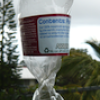
Crunch Time
Source Institutions
In this quick and easy activity and/or demonstration, learners use two empty 2-liter bottles and hot tap water to illustrate the effect of heat on pressure.
Exercise and Memory
Source Institutions
This activity (page 1 of the PDF under SciGirls Activity: Exercise and Memory) is a full inquiry investigation into the effects of exercise on short term memory.
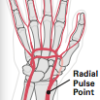
Heart Rate and Exercise
Source Institutions
In this activity about heart health (on page 27 of the PDF), learners measure their heart rates after a variety of physical activities and compare the results with their resting heart rates, and with
Mission: Control!
Source Institutions
In this activity and game, learners will train to improve balance and spatial awareness by performing throwing and catching techniques on one foot.
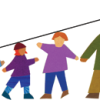
Line Up: Using Math To Stand In Line
Source Institutions
Put math of measurement into lining up — and make waiting in line fun. Choose a size characteristic that learners can physically compare, such as foot length or hair length.
Your Energy Needs
Source Institutions
In this activity about the relationship between food and energy (page 8 of PDF), learners estimate average daily baseline energy (Calorie) needs and energy needs for different levels of activity.
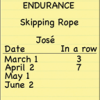
Endurance: How Many Can You Do in a Row?
Source Institutions
Combine math and exercise with this activity. Learners count how many times in a row they can skip rope or throw and catch a ball.

Crew Strength Training
Source Institutions
In this activity, learners will train to develop upper and lower body strength in their muscles and bones by performing body-weight squats and push-ups.
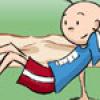
Do a Spacewalk!
Source Institutions
In this activity, learners train to increase muscular strength and improve upper and lower body coordination by performing the “bear crawl” and the "crab walk.” Learners perform the exercises over tim
Base Station Walk-Back
Source Institutions
In this activity, learners will train to improve lung, heart, and other muscle endurance as they walk a progressive, measured distance.
Jump for the Moon
Source Institutions
In this activity, learners will train to increase bone strength and to improve heart and other muscle endurance by performing jump training with a rope, both while stationary and moving.