
Search Results
Showing results 1 to 18 of 18
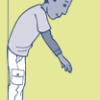
Throw Your Weight Around
Source Institutions
During this activity, learners take part in a variety of tasks which involve moving and balancing different body parts.
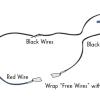
Neural Network Signals
Source Institutions
In this activity, learners create an electrical circuit and investigate how some dissolved substances conduct electricity.
Slap Shot
Source Institutions
How quick are your reflexes? In this online game, you are a hockey goalie defending quick slap shots. Learn about reaction time, muscle memory, and reflexes.
Curve Control
Source Institutions
In this online game, learners must keep their snowboarding racer in the middle of the course without veering off track or hitting obstacles.
Balance Challenge
Source Institutions
In this quick activity, learners take a balance challenge to measure their average balance time. As they collect data, they investigate how practice and repetition improve their balance time.
Ins and Outs of Respiration: Determine your Respiratory Rate
Source Institutions
Learners will determine their respiratory rate and explore the factors that affect breathing rate by filling out and using the Respiratory Chart provided in the lesson.
Reaction Time
Source Institutions
In this activity, learners explore reaction time and challenge themselves to improve their coordination. Do you want to move faster? Catch that ball that you never seem to see in time?
Right Foot/Left Foot
Source Institutions
In this activity (2nd on the page), learners conduct a series of tests to find out which foot is more dominant. In other words, are they right-footed or left-footed?
Workin' It Out
Source Institutions
In this activity, learners explore how to stay fit the fun way. Learners participate in three physical activities.
Stomp High Low
Source Institutions
Learners work together as a group to learn a new physical activity. After working for a few rotations, learners time themselves as part of a contest.
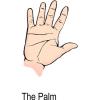
Right Hand/Left Hand
Source Institutions
In this activity (1st on the page), learners conduct a series of tests to find out which of their hands is more dominant. In other words, are they right-handed or left-handed?
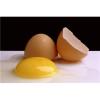
Protect That BRAIN!: Mr. Egghead
Source Institutions
This activity demonstrates the importance of wearing a helmet to protect the brain. An egg is used to symbolize a head with the shell as the skull and the inside of the egg as the brain.

Pitch, Roll and Yaw: The Three Axes of Rotation
Source Institutions
In this activity (page 87 of the PDF), learners move their bodies to better understand the three axes of rotation: pitch, roll and yaw.

Exercise and Memory
Source Institutions
This activity (page 1 of the PDF under SciGirls Activity: Exercise and Memory) is a full inquiry investigation into the effects of exercise on short term memory.
Mission: Control!
Source Institutions
In this activity and game, learners will train to improve balance and spatial awareness by performing throwing and catching techniques on one foot.
Variation Game
Source Institutions
In this set of outdoor games, learners play the role of monkeys that are trying to get enough resources (food, shelter, and space) to survive.
Do a Spacewalk!
Source Institutions
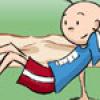
In this activity, learners train to increase muscular strength and improve upper and lower body coordination by performing the “bear crawl” and the "crab walk.” Learners perform the exercises over tim
Double Dutch Distractions
Source Institutions
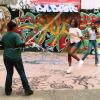
This activity (page 2 of the PDF under SciGirls Activity: Double Dutch) is a full inquiry investigation into whether hearing or seeing has a bigger effect on jump rope performance.