
Search Results
Showing results 41 to 60 of 68
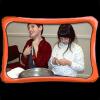
Slowing the Flow
Source Institutions
In this experiment, pairs of learners explore how cold water affects circulation. The mammalian diving reflex (MDR) slows circulation when the body is exposed to cold water.

Statistics: Steppin' Out
Source Institutions
In this math lesson, learners construct box-and-whisker plots to analyze and compare data sets. Learners investigate whether or not long-legged people run faster than short-legged people.
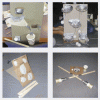
Get-Moving Game
Source Institutions
In this invention challenge activity, learners create an indoor game for one or two people that gets you moving.
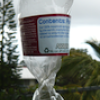
Crunch Time
Source Institutions
In this quick and easy activity and/or demonstration, learners use two empty 2-liter bottles and hot tap water to illustrate the effect of heat on pressure.

Race for Survival
Source Institutions
During this interactive "survival" game, students learn about the importance of camouflage and how it helps animals to blend into their surroundings, as either predator or prey.
Catch the Beat
Source Institutions
This is an activity about music, movement, and math. Learners will start a rhythm pattern with 2, 3, or 4 beats. For instance, tap your foot, jump, clap, repeat.
Take a Hike!: A Family Forest Walk
Source Institutions
In this family or group inquiry activity, learners use their senses to explore a local forest or woodland.
Exercise and Memory
Source Institutions
This activity (page 1 of the PDF under SciGirls Activity: Exercise and Memory) is a full inquiry investigation into the effects of exercise on short term memory.
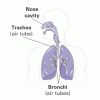
Heart and Lungs
Source Institutions
In this environmental health activity, learners investigate their breathing and pulse rates, and learn how these measurements are affected by physical activity.
How Active Are You?
Source Institutions
In this activity, learners explore what is and is not active play and how it contributes to a healthy body and mind. Making active play a routine part of every day is a key concept of the experience.
Healthy Choices: A Family A-Fair
Source Institutions
Learners and their families celebrate and recognize the importance of making healthy choices every day by participating in a health fair.
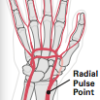
Heart Rate and Exercise
Source Institutions
In this activity about heart health (on page 27 of the PDF), learners measure their heart rates after a variety of physical activities and compare the results with their resting heart rates, and with
Bag of Bones
Source Institutions
In this activity, learners will use cereal to conduct an experiment and investigate how decreased bone density is related to increased risk of bone fracture.
Cardio Comparisons
Source Institutions
In this activity, learners discover how their heart rate changes in different situations.
Mission: Control!
Source Institutions
In this activity and game, learners will train to improve balance and spatial awareness by performing throwing and catching techniques on one foot.
Line Up: Using Math To Stand In Line
Source Institutions
Put math of measurement into lining up — and make waiting in line fun. Choose a size characteristic that learners can physically compare, such as foot length or hair length.
Variation Game
Source Institutions
In this set of outdoor games, learners play the role of monkeys that are trying to get enough resources (food, shelter, and space) to survive.
Your Energy Needs
Source Institutions
In this activity about the relationship between food and energy (page 8 of PDF), learners estimate average daily baseline energy (Calorie) needs and energy needs for different levels of activity.
Good Stress
Source Institutions
In this activity about physical stress (page 28 of PDF), learners discover that muscles and bones need to work to stay strong.
Soccer Kicks
Source Institutions
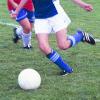
This activity (on page 2 of the PDF under SciGirls Activity: Soccer Ball Kick) is a full inquiry investigation into transfer of motion.