
Search Results
Showing results 1 to 20 of 44
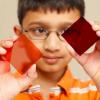
Exploring Materials: Nano Gold
Source Institutions
In this activity, learners discover that nanoparticles of gold can appear red, orange or even blue. They learn that a material can act differently when it’s nanometer-sized.
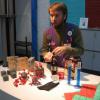
Surface Area
Source Institutions
In this demonstration, learners discover that nanoparticles behave differently, in part because they have a high surface area to volume ratio.
Battleships: Searching Algorithms
Source Institutions
This activity explores the main algorithms that are used as the basis for searching on computers, using different variations on the game of battleships.
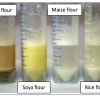
Wheat Evolution: Sedimentation Testing
Source Institutions
In this activity (Page 30 of PDF), learners investigate the evolution of wheat by conducting sedimentation tests on different flours.
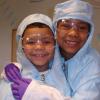
Tiny Particles, Big Trouble!
Source Institutions
In this activity, learners discover why some nanoscale science and technology is done in the controlled environment of a clean room, what clean rooms are like, and how scientists help keep the clean r

Liquid Body Armor
Source Institutions
In this activity, learners explore how nanotechnology is being used to create new types of protective fabrics.
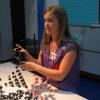
The Electric Squeeze
Source Institutions
In this activity/demo about piezoelectricity, learners discover how some crystals produce electricity when squeezed.
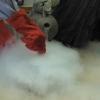
Nano Ice Cream
Source Institutions
In this activity/demo, learners discover how liquid nitrogen cools a creamy mixture at such a rapid rate that it precipitates super fine grained (nano) ice cream.
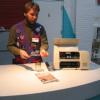
Inkjet Printer
Source Institutions
In this activity, learners investigate how inkjet printers produce tiny, precise drops of ink.

Common Scents
Source Institutions
Learners use a mortar and pestle to extract clove oil from cloves using denatured alcohol. They put this oil on paper, which they can take home.
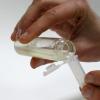
DNA Nanotechnology
Source Institutions
In this activity, learners explore deoxyribonucleic acid (DNA), a nanoscale structure that occurs in nature.
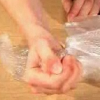
One In The Hand
Source Institutions
In this physics demonstration, learners are challenged to break a raw egg just by squeezing it. Learners will be shocked by their inability to complete the deceivingly simple challenge.
Forms of Carbon
Source Institutions
In this activity, educators can demonstrate how the nanoscale arrangement of atoms dramatically impacts a material’s macroscale behavior.

Exploring Size: Scented Balloons
Source Institutions
In this activity, learners use their sense of smell to explore the world on the nanoscale.
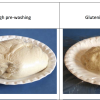
Wheat Evolution: Dough Washing
Source Institutions
In this activity (Page 22 of PDF), learners investigate the evolution of wheat by washing different types of dough with water and comparing the results.
Wheat Evolution: Dough Rising and Baking
Source Institutions
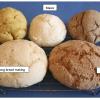
In this activity (Page 25 of PDF), learners investigate the evolution of wheat by creating dough from different flours, observing the samples of dough as they rise, and then baking the dough.
Magic Sand: Nanosurfaces
Source Institutions
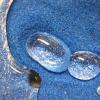
This is an activity/demo in which learners are exposed to the difference bewteen hydrophobic surfaces (water repelling) and hydrophilic surfaces (water loving).

Rocket Science
Source Institutions
Learners create a small explosion by collecting hydrogen and oxygen gas together and squeezing them into a flame.

Starch Breakdown
Source Institutions
Learners use Benedict’s solution and heat to test for the presence of simple sugars in glucose, sucrose, starch, and starch combined with amylase.

Biobarcodes: Antibodies and Nanosensors
Source Institutions
In this activity/demo, learners investigate biobarcodes, a nanomedical technology that allows for massively parallel testing that can assist with disease diagnosis.