
Search Results
Showing results 261 to 280 of 339
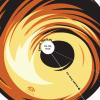
Race Around the Black Hole
Source Institutions
In this game, learners cutout a model black hole "cone" and attempt to roll around a marble or other small spherical object without touching the event horizon.
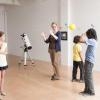
Exploring the Solar System: Big Sun, Small Moon
Source Institutions
“Exploring the Solar System: Big Sun, Small Moon” is a hands-on activity that explores the concept of apparent size and allows visitors to experience this phenomena using familiar objects—a tennis bal
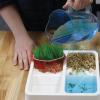
Exploring Earth: Land Cover
Source Institutions
This activity models some of the ways natural processes, such as erosion and sediment pollution, affect Earth’s landscape.

Edible Earth
Source Institutions
In this activity, learners make a model of the solid Earth's layers that's good enough to eat! Learners use tasty foodstuffs to simulate Earth's inner core, outer core, mantle, and crust.
The Desert Blooms!
Source Institutions
This activity attempts to clear up the common misconception that deserts are always hot, totally dry, and uninhabitable.
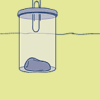
Rescue Mission
Source Institutions
In this hands-on activity, learners use the steps of the design process to create a hook to rescue a "space capsule" from the water.
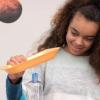
Exploring the Universe: Static Electricity
Source Institutions
This activity encourages visitors to build an electroscope—a simplified version of one of the tools scientists use to study the invisible forces on Earth and in space.
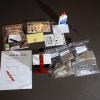
Sand Activity
Source Institutions
In this activity, learners observe mixtures of sand samples glued to note cards, and consider how sand can differ in size, shape, and color, and where it comes from.

Exploring the Solar System: Pocket Solar System
Source Institutions
“Exploring the Solar System: Pocket Solar System” is a hands-on activity in which visitors make a scale model of the distances between objects in our solar system.
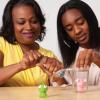
Molecules in Motion
Source Institutions
"Molecules in Motion" explores how materials behave and change in a vacuum.
Pollution in Our Watershed
Source Institutions
By building a simple watershed with paper and markers and then using a spray bottle to simulate precipitation, learners will understand how pollution accumulates in our water sources, especially from
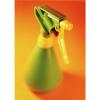
Wet Art
Source Institutions
In this activity (located on page 10 of the PDF), learners explore the properties of spraying and dripping water, while making art.
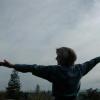
Standing in the Shadow of Earth
Source Institutions
This fun and simple hands-on astronomy activity demonstrates the shadow of the Earth as it rises as a dark blue shadow above the eastern horizon.
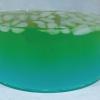
Ocean Currents
Source Institutions
In this activity, learners will explore how density is affected by temperature and how that can create currents.

Exploring Black Holes and Gravity
Source Institutions
This fun and simple hands-on astronomy activity lets learners imagine what would happen if our Sun were replaced with a black hole.
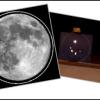
Magnification vs. Resolution: Can you see the flag on the Moon?
Source Institutions
This fun and simple hands-on astronomy activity lets learners explore the difference between telescope magnification and resolution.
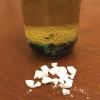
Lava Lamp
Source Institutions
In this activity, learners will create their own lava lamps. Learners will explore density, effervescence and chemistry through this activity.
Aesop's Arithmetic
Source Institutions
In this activity (located on page 9 of the PDF), learners are introduced to Aesop's fable, "The Crow and the Pitcher." In the story, a clever crow drops pebbles into a pitcher to cause the water level
It's a Gas, Man
Source Institutions
In this activity, learners discover if carbon dioxide has an effect on temperature.
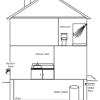
Be a Plumber
Source Institutions
In this activity (located on page 6 of the PDF), learners explore the ways people access water in their homes.