
Search Results
Showing results 601 to 620 of 2375
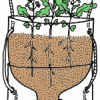
TerrAqua Investigation Column: What is the Land-Water Connection?
Source Institutions
In this investigation, learners plant seeds in a 2-liter bottle filled with soil that is connected to a water source below. Over the next few weeks, learners observe how the plants grow.
Building a Community From the Ground Up
Source Institutions
In this activity, a group of learners work collaboratively to design and construct a paper model showing the evolution of an environment through multiple stages, from prehistory through the modern cit
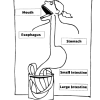
Traveling Tapeworm
Source Institutions
In this "gross" activity (on pages 34-46), learners make a life-size model of a human digestive tract, and follow the life of a beef tapeworm as it makes its way through.
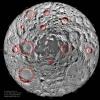
Shapes and Angles
Source Institutions
In this activity (page 7 of PDF), learners will identify the general two-dimensional geometric shape of the uppermost cross section of an impact crater.
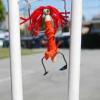
Gymnast
Source Institutions
In this physics activity, learners build a toy with a figure that spins around like a gymnast on the high bar.
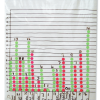
An Inventory of My Traits
Source Institutions
In this genetics meets math activity, learners take inventories of their own easily-observable genetic traits and compare those inventories with other learners in groups.
Moo Glue
Source Institutions
Using a milk-based recipe, learners create "moo glue" which is basically white school-type glue. The "secret ingredient" in milk that helps make glue is a chemical called casein.
Human Interface Design: The Chocolate Factory
Source Institutions
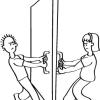
In this activity about human interface design issues, learners help the Oompa-Loompas of a great chocolate factory solve different problems.
Thrown For A Curve: Pitch Like A Big Leaguer
Source Institutions
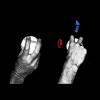
You may have tried to throw a curveball or a slider, or even a screwball, with an ordinary baseball and found it difficult to do.
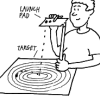
Seedy Travelers
Source Institutions
In this activity (on pages 18-28), learners explore how the shape of seeds affects how they are dispersed by wind, birds, ocean currents and other means.
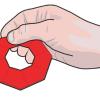
Origami Flying Disk
Source Institutions
In this three-part activity, learners use paper to explore Bernoulli's Principle — fast-moving air has lower pressure than non-moving air.
Buoyant Bubbles
Source Institutions
What keeps bubbles and other things, like airplanes, floating or flying in the air?
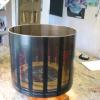
Bike Wheel Zoetrope
Source Institutions
In this activity (posted on April 18, 2011), learners follow the steps to construct a zoetrope, a device that produces an illusion of action from a rapid succession of static pictures, using a 16" bik
Investigating Starch
Source Institutions
In this activity (on pages 10-15), learners investigate starch in human diets and how plants make starch (carbohydrates) to use as their food source.
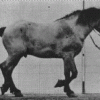
Horse Gaits Flipbooks
Source Institutions
In this activity, learners explore the gait of horses by constructing flipbooks with British photographer Eadweard Muybridge's famous photographs.
Bake Ice Cream in Your Oven
Source Institutions
In this a hands-on activity, learners explore how to put ice cream in an oven without it melting. Ideas in this activity include insulation and cooking.
It's the "Rain," Man
Source Institutions
In this weather forecasting activity, learners use common materials to construct a rain gauge and measure daily, monthly, and yearly rainfall.
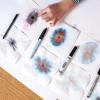
Chemistry is Colorful
Source Institutions
In this activity, learners explore materials through paper chromatography.
Luminescence
Source Institutions
In this two-part activity about luminescence, learners explore the chemistry that happens inside glow sticks and other light producing reactions.
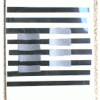
Sliding Gray Step
Source Institutions
How can you make one shade of gray look like two? By putting it against two different color backgrounds! This activity allows learners to perform this sleight of hand very easily.