
Search Results
Showing results 661 to 680 of 991
A Slime By Any Other Name
Source Institutions
This fun video explains how to make a batch of oobleck (or slime) and why this special substance is known as a "non-Newtonian" fluid. Watch as Mr.
Sticky Snot
Source Institutions
In this activity, learners create slime to model mucus and examine how it collects simulated particles. Mucus keeps particles from the environment out of our lungs when we breathe.

Smelly Balloons
Source Institutions
Are balloons porous or non-porous? In this activity, learners watch an entertaining Mr. O video and conduct a simple experiment to find out.
Balancing Act
Source Institutions
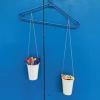
In this activity, learners will build thier own balance scale. Learners will explore weight and comparison through this activity.
What's the Difference between Weather and Climate?
Source Institutions
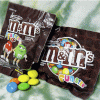
In this interactive and informative group activity, learners use packages of M&M's to illustrate the difference between weather and climate.

Make Your Own Rainstick
Source Institutions
In this activity, leaners build their very own rainsticks, an instrument filled with pebbles and seeds that create sounds like falling rain. Save costs by using material found around the home.
Make and Fly a Helicopter
Source Institutions
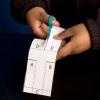
Learners follow the template to build and fly a paper helicopter.
Detectives de arena
Source Institutions
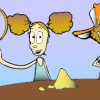
¡En esta tira cómica, Mateo y Cientina son detectives! Ellos usan sus destrezas investigativas para identificar de dónde provinieron algunas muestras de arena.

Big Things Come in Little Packages
Source Institutions
As a group, learners investigate three packages which are all the same size and shape, but have different contents. One is filled with foam, one is filled with wood, and one is filled with metal.
Straw Pipes
Source Institutions
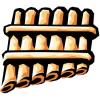
Learners build pan pipes out of drinking straws by cutting them to different lengths. Then, learners make music by blowing across the straws and playing some well-known songs.
Wetland Filter Model
Source Institutions
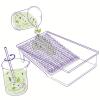
In this quick activity (located on page 2 of the PDF under GPS Wetlands Activity), learners will model how wetlands act as natural filters for the environment.

Is it a Fair Game?
Source Institutions
In this math activity, learners play two versions of a card game and decide what makes a game fair. Learners also practice addition and subtraction skills.
Circles of Magnetism IV
Source Institutions
In this activity related to magnetism and electricity, learners observe as two parallel, current-carrying wires exert forces on each other.
Magnetism Hunt
Source Institutions
In this activity about magnetism (page 4 of the PDF), learners will experiment with magnets and different objects to find out that not all metals are attracted to magnets.

Black Holes: No Escape
Source Institutions
This fun and simple hands-on astronomy activity lets learners experiment with marbles and weights to discover some basics about gravity and black holes.

Float Your Boat
Source Institutions
In this physics activity, learners will explore buoyancy.
Race to the Dollar
Source Institutions
In this math activity, learners play a card game to practice adding coins quickly, just like a banker. First, learners create coin cards. Next, the cards are dealt to each player.

Mechanical Grabber
Source Institutions
In this engineering activity, challenge learners to make a "grabber" that can pick up trash. Learners use simple materials to create pinchers that can grab small items.

Circle Logic
Source Institutions
This is a deceptively simple game to teach strategy, planning, and pattern analysis. In this game, learners take turns removing tokens from a board, and develop a plan to take the last piece.
Color Spy
Source Institutions
In this activity (16th on the page), learners play a variation of the "I Spy" game to explore color. Learners work in teams with each team assigned a color.