
Search Results
Showing results 1 to 20 of 51
Modeling Day and Night
Source Institutions
In this activity (on page 1 of the PDF), learners make a "mini-globe" to investigate the causes of day and night on our planet.
Meteoroids and the Craters They Make
Source Institutions
In this activity, learners investigate the formation of craters. Learners will examine how the size, angle and speed of a meteorite's impact affects the properties of craters.

Drain Game
Source Institutions
In this activity (on pages 36-39), learners make a model of a watershed out of paper, then run water down the mountain to simulate how rainfall and pollution affect watersheds.
Landing the Rover
Source Institutions
In this team design challenge (page 19-24 of PDF), learners "land" a model Lunar Rover in a model Landing Pod (both previously built in activities #3 and #4 in PDF).
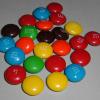
Radioactive Decay of Candium
Source Institutions
In this simulation, learners use M&M™ candy to explore radioactive isotope decay.
Wetlands
Source Institutions
Learners create a model of a wetland to observe how it absorbs and filters water from the environment.
Oil Spill Cleanup
This hands-on experiment will provide learners with an understanding of the issues that surround environmental cleanup.
Vanishing Craters
Source Institutions
In this activity (on pages 12-15), learners make a crater model and test the effects of weather (rain) on its surface.
Light on Other Planets
Source Institutions
In this math-based activity, learners model the intensity of light at various distances from a light source, and understand how astronomers measure the amount of sunlight that hits our planet and othe
Mapping Sea Level Rise
Source Institutions
In this activity related to climate change, learners create and explore topographical maps as a means of studying sea level rise.
Chances Are: OH NO! Look Out Below for a UFO
Source Institutions
In this math lesson (on Page 13), learners predict and simulate the likelihood of an event occurring.
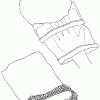
How Animals Stay Warm
Source Institutions
In this quick activity, learners explore how blubber protects animals from the cold by making a "blubber mitt." Using cooking shortening, two zip-top sandwich bags, and duct tape, learners simulate bl

Walk On Water Bugs
Source Institutions
In this activity (on pages 29-35), learners examine water pollution and filtration.
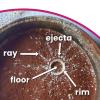
Make An Impact
Source Institutions
In this hands-on activity, learners simulate the crashing and smashing of a meteor impact using household cooking supplies.
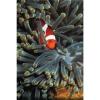
Underwater Hide and Seek
Source Institutions
In this activity, learners experience firsthand how marine animals' adaptive coloration camouflages them from prey.
Map That Habitat
Source Institutions
Historically, sea floor mapping (bathymetry) was done by soundings.
Regolith Formation
Source Institutions
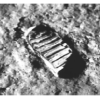
In this three-part activity, learners use food to determine the effects of wind, sandblasting and water on regolith (dust) formation and deposition on Earth.
X-Ray Spectra
Source Institutions
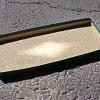
In this activity, learners use simple materials to simulate the effect of X-rays in a safe way. Learners place a piece of window screen over a box and a cardboard pattern on top of the screen.
Digging Into the Past
Source Institutions
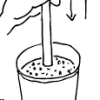
This activity (on pages 23-27) lets learners simulate the work of scientists who take core samples of Earth's rocky layers to determine geological history.
Create a Mangrove Tree
Source Institutions
In this group activity, learners will explore the characteristics, functions and uniqueness of the mangrove tree.