
Search Results
Showing results 1021 to 1040 of 2481
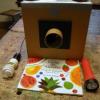
Cardboard Opaque Projector
Source Institutions
In this activity, learners construct a projector out of cardboard to view their favorite images (such as storybook illustrations) on the wall.
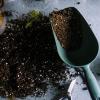
Super Soaker
Source Institutions
In this activity (page 1 of the PDF under SciGirls Activity: Bogs), learners will test cups full of potting soil, sand, and sphagnum moss to see which earth material is able to soak up the most water.
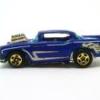
Newton's in the Driver's Seat
Source Institutions
In this playful physics activity (page eight of the pdf), learners use toy cars to explore how speed and weight affect the results of collision.
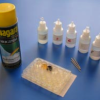
Changing Colors
Source Institutions
In this challenge, learners have to figure out in what order to combine five solutions to change the color from clear, to yellow, to blue, and back to clear.
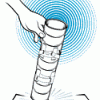
CANdemonium: Make a Drum Out of Recycled Cans
Source Institutions
With three cans and some tape, make a drum that you bonk down on any surface to produce a variety of sounds. This activity also teaches you about pitch, vibration, and frequency.

Magic Inks
Source Institutions
Learners write their initials by applying different clear "magic ink" solutions to separate pieces of paper and then "develop" the inks with other clear solutions.

Fantastic Plastic
Source Institutions
In this activity, learners investigate the properties of plastic bags. Learners find out what happens when they slowly push a pencil through a plastic bag filled with water.

What-a-cycle
Source Institutions
In this activity, learners act as water molecules and travel through parts of the water cycle to discover that it is more complex than just water moving from the ground to the atmosphere.
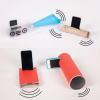
Tune Booster
Source Institutions
In this activity, learners build unique sound enhancing inventions with items from around the house to amplify sound from their smart phone's speakers.
Wilberforce Pendulum
Source Institutions
In this activity, learners build a Wilberforce Pendulum, a special coupled pendulum in which energy is transferred between two modes of vibration, longitudinal ("bounce') and torsional ("twist"), on a
Fun with Shapes
Source Institutions
In this activity, early learners combine pre-cut recognizable shapes and their own abstract ideas to make representational pictures (e.g. houses, trees, shoes).

Sound Sandwich
Source Institutions
With a straw, two craft sticks, and some rubber bands, construct a noisemaker called a Sound Sandwich and explore how vibration produces sound.
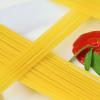
Spaghetti Bridge
Source Institutions
Learners explore the field of civil engineering by making a bridge using spaghetti as their primary building material.
A Crayon Rock Cycle- Sedimentary
Source Institutions
This is part 1 of the three-part "Crayon Rock Cycle" activity. In this activity, learners explore how sedimentary rocks form.
Balloon Surprise
Source Institutions
In this activity, learners discover a trick to release the air out of a balloon without popping it.
Slowing the Flow
Source Institutions
In this experiment, pairs of learners explore how cold water affects circulation. The mammalian diving reflex (MDR) slows circulation when the body is exposed to cold water.
Gelatin Optic Fibers
Source Institutions
In this activity, learners make optical fibers out of strips of gelatin.
Crystals: Grow Your Own Garden
Source Institutions
In this simple activity (on page 2 of the PDF), learners make a crystal garden using salt, water, and a brick.
Frog Eggs
Source Institutions
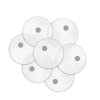
In this activity, learners compare frog eggs to chicken eggs to better understand why frog eggs need water. Learners compare a boiled chicken egg to "frog eggs" represented by boiled tapioca.
Busted by Biology
Source Institutions
In this two-part activity, learners will extract their own DNA from their cheek cells and learn how DNA is analyzed and used to solve crimes.