
Search Results
Showing results 1 to 20 of 49
Food Grab
Source Institutions
In this outdoor activity, learners design devices that will catch prey or gather plants.
Digestive System: A Kinesthetic Lesson
Source Institutions
In this simulation, learners act out each digestive function of the organs, tissues, and cells in the digestive tract.
Grabbing a Bite to Eat
Source Institutions
In this activity, learners perform an experiment that replicates the dilemma faced by birds in acquiring food from a confined area.
Flocking for Food
Source Institutions
In this outdoor beach activity, learners use a variety of "beaks" (such as trowels, spoons or sticks) to hunt for organisms that shore birds might eat.
Deer Me: A Predator/Prey Simulation
Source Institutions
In this activity, learners will simulate the interactions between a predator population of gray wolves and a prey population of deer in a forest.
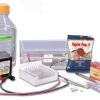
Colorful Electrophoresis
Source Institutions
In this activity, learners follow step-by-step instructions to build a gel electrophoresis chamber using inexpensive materials from local hardware and electronic stores.
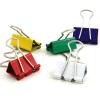
Clipbirds
Source Institutions
In this simulation of natural selection, learners use binder clips in three different sizes to represent the diversity of beak sizes in a bird population.
Population Game
Source Institutions
In this outdoor game, learners simulate a herd of deer trying to survive in an area called the "home range." Learners explore the concept of "carrying capacity"—what size population of an organism can
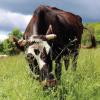
Sustainable Grazing
Source Institutions
In this activity, learners investigate the food, water, and space needs of common livestock animals.
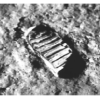
Regolith Formation
Source Institutions
In this three-part activity, learners use food to determine the effects of wind, sandblasting and water on regolith (dust) formation and deposition on Earth.
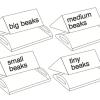
Clippy Island: An Investigation into Natural Selection
Source Institutions
In this activity, leaners will observe the process of natural selection on a population of birds called 'Springbeaks' over four seasons of breeding on an isolated environment called 'Clippy Island.' L
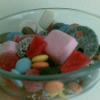
Candy Dish Natural Selection
Source Institutions
In this yummy biology activity (page 3 of the PDF), learners participate in a demonstration of natural selection.
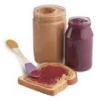
Peanut Butter and Jelly Robot
Source Institutions
This is an activity about robotics programming. Learners will discover how precise programmers have to be as they instruct a friend to make a peanut butter and jelly sandwich.

Chocolate Lava
Source Institutions
In this yummy earth science activity (page 5 of the PDF), learners use fudge to learn about different kinds of lava.

Chocolate (Sea Floor) Lava
Source Institutions
In this edible experiment, learners pour "Magic Shell" chocolate into a glass of cold water. They'll observe as pillow shaped structures form, which resemble lavas on the sea floor.
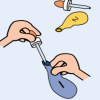
The Nose Knows!
Source Institutions
In this activity on page 9 of the PDF, learners test how flavoring extracts move through the walls of a balloon.
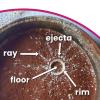
Make An Impact
Source Institutions
In this hands-on activity, learners simulate the crashing and smashing of a meteor impact using household cooking supplies.
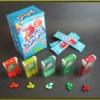
Adherence to HIV Treatment
Source Institutions
In this activity, learners simulate taking HIV antiretroviral drugs by using Tic Tac mints and Kool-Aid packets.

Shape Up!
Source Institutions
In this activity (25th on the page) about learning and memory, learners explore a training method that animal trainers employ called "shaping." Working in pairs, learners will attempt to "shape" each
Sweetly Balanced Equations
Source Institutions
In this (edible) activity, learners balance chemical equations using different kinds and colors of candy that represent different atoms. Learners will work in pairs and explore conservation of atoms.