
Search Results
Showing results 1 to 20 of 105
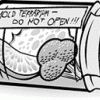
Mold Terrarium: What Grows on Leftover Food?
Source Institutions
This activity shows you how to make a mold terrarium using a jar and leftover food.
Experiment with Fat
Source Institutions
In this nutrition/food science activity, learners conduct an experiment and record data to compare the amount of fat in different foods.
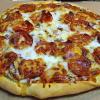
Food for the Brain
Source Institutions
In this activity, learners dissect a piece of pizza to learn about nutrients important for health.
The Nose Knows
Source Institutions
In this activity (2nd activity on the page), learners explore how the nose is responsible for part of the flavor we taste in food.
Energy Sources
Source Institutions
In this activity about the relationship between food and energy (page 5 of PDF), learners conduct an experiment to compare how much energy is released as heat from two different foods.
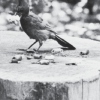
Jay Play
Source Institutions
In this outdoor activity, learners find out the color of food that jays prefer and then try to change the birds' preference by altering the taste of the food with salt.
Ripening of Fruits and Vegetables
Source Institutions
In this activity, learners test the rate of ripening fruit and vegetables and use a chemical to inhibit the ripening process.
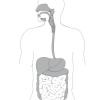
Digestion
Source Institutions
In this food science activity, learners explore digestion and proteins by observing the action of meat tenderizer on luncheon meat.
Food Forensics: A Case of Mistaken Identity
Source Institutions
This lesson is designed to serve as an introduction to the immune system. It can stand alone or it can lead into further studies of the immune system.
Energy For Life
Source Institutions
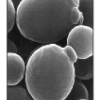
In this activity about the relationship between food and energy (page 1 of PDF), learners observe and quantify the growth of yeast when it is given table sugar as a food source.

Tasty Buds
Source Institutions
In this activity (1st activity on the page), learners explore their sense of taste and the structure of the tongue by taste-testing various foods.
Biochemistry Happens Inside of You!
Source Institutions
In this four-part activity, learners explore how the body works and the chemistry that happens inside living things.
Iodine Investigators!
Source Institutions
In this activity on page 7 of the PDF (Chemistry—It’s Elemental), learners use iodine to identify foods that contain starch.
Fuel for Living Things
Source Institutions
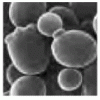
In this activity, learners observe what happens when yeast cells are provided with a source of food (sugar). Red cabbage "juice" will serve as an indicator for the presence of carbon dioxide.
Chemical Reactions in Your Mouth
Source Institutions
In this chemistry activity (page 5 of the PDF), learners will see that chewing is more than just the crushing up of food; there is actually a chemical change going on at the same time.
A Feast for Yeast
Source Institutions
In this activity on page 6 of the PDF (Get Cooking With Chemistry), learners investigate yeast. Learners prepare an experiment to observe what yeast cells like to eat.
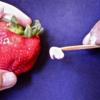
A Simply Fruity DNA Extraction
Source Institutions
In this activity, learners extract DNA from a strawberry and discover that DNA is in the food they eat.
Animal Scent
Source Institutions
This activity (on page 3 of the PDF under GPS: Animal Scent Activity) is a full inquiry investigation into animal behavior.
Is That DNA in My Food?
Source Institutions
In this activity, learners extract DNA from wheat germ. Use this activity to introduce learners to DNA, biotechnology and genetic engineering.
Plant Power
Source Institutions
In this chemistry challenge, learners identify which plants have the enzyme "catalase" that breaks hydrogen peroxide into water and oxygen.