
Search Results
Showing results 41 to 51 of 51
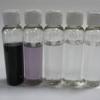
Exploring Size: Scented Solutions
Source Institutions
This is an activity in which learners will find that they can detect differences in concentration better with their nose (smelling) than with their eyes (seeing).
Half Full or Half Empty
Source Institutions
In this activity (12th activity on the page), learners conduct an experiment to demonstrate how muscles are constantly feeding information to the brain about what they are doing.
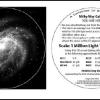
A Universe of Galaxies: How is the Universe Structured?
Source Institutions
This fun hands-on astronomy activity lets learners explore models of the Milky Way and other galaxies to get a sense of relative distances to other galaxies.
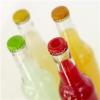
Tasty Visions
Source Institutions
In this activity (5th activity on the page), learners explore how what you see influences taste. In experiment 1, learners taste five sodas, one of which is clear soda with orange food coloring.
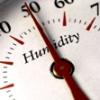
Making Sense of Sensors
Source Institutions
In this activity, learners explore sensors and focus specifically on how to measure humidity using a sensor.
Finding the Right Crater
Source Institutions
This quick demonstration (on page 11 of PDF) allows learners to understand why scientists think water ice could remain frozen in always-dark craters at the poles of the Moon.
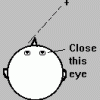
Our Sense of Sight: How We Perceive Movement, Depth and Illusions
Source Institutions
In this activity, learners investigate visual perception as well as plan and conduct their own experiments.
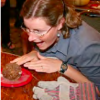
Cook Up a Comet
Source Institutions
In this activity (on page 5 of PDF), learners use dry ice and household materials to make scientifically accurate models of comets.
Slimy Cells
Source Institutions
In this activity, learners solidify their conceptualization of cells by building a model of a cell in a ziplock bag.
Our Sense of Sight: Color Vision
Source Institutions
In this activity, learners investigate color vision as well as plan and conduct their own experiments.
Making An Impact!
Source Institutions
In this activity (on page 14 of PDF), learners use a pan full of flour and some rocks to create a moonscape.