
Search Results
Showing results 1 to 20 of 30

Olympic Track Meet
Source Institutions
In this activity, learners discover how exercise helps keep the body healthy. Learners increase their heart rates by running and understand how running fast versus walking affects their pulse rates.

Boomerang
Source Institutions
Learners trace, cut out and fly a boomerang, outdoors or in a large indoor space.
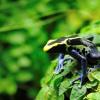
Frog Olympics
Source Institutions
Did you know that a bullfrog can jump a distance of 10 times its body length? Learn more about nature's most acrobatic amphibian, the frog, through this set of short, hands-on activities.
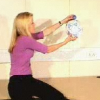
Extra Bounce
Source Institutions
In this indoor or outdoor demonstration, use a large and small ball to illustrate conservation of energy and momentum.
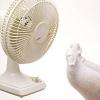
Sock It To Me
Source Institutions
In this activity, learners discover how sweating makes us feel cooler. Learners put on one damp sock and one dry sock and sit in front of a fan.
Ins and Outs of Respiration: Determine your Respiratory Rate
Source Institutions
Learners will determine their respiratory rate and explore the factors that affect breathing rate by filling out and using the Respiratory Chart provided in the lesson.
Do Sweat It!
Source Institutions
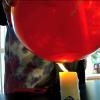
In this activity, learners explore why humans sweat. Learners compare the effects of heat on a balloon filled with air and a balloon filled water.
Jump Start
Source Institutions
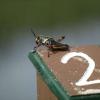
In this movement and measurement activity, learners jump as far as they can three times, and compare their longest jump to the longest jump of their friends, classmates and/or family members.
Reaction Time
Source Institutions
In this activity, learners explore reaction time and challenge themselves to improve their coordination. Do you want to move faster? Catch that ball that you never seem to see in time?
Pósteres de Creatividad y Matemáticas
Source Institutions
Exponga estos pósteres en el salón o déjelos donde los chicos los puedan explorar. Los chicos buscan las respuestas en libros de consulta, explorando el salón, y usando su creatividad.
Stethoscope
Source Institutions
Make a copy of the first stethoscope with only a cardboard tube! René Laennec invented the first stethoscope in 1819 using an actual paper tube!
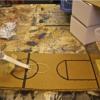
Finger Basketball
Source Institutions
In this activity, learners build mini-basketball courts using cardboard and measuring spoons. Use this activity to introduce learners to catapults, forces, and levers.

Pulse of Life: Measure Your Pulse
Source Institutions
In this activity, learners take their own pulse and explore how heart rate is affected by various activities.
Math and Creativity Posters
Source Institutions
These math posters have questions written on them, such as: How many colors can you name in a minute? or How many seconds can you balance on one foot?
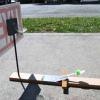
Parabola Basketball
Source Institutions
In this activity, learners build mini-basketball courts and explore the laws of physics. Learners discover that everything you throw or shoot on earth travels in a parabola.
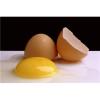
Protect That BRAIN!: Mr. Egghead
Source Institutions
This activity demonstrates the importance of wearing a helmet to protect the brain. An egg is used to symbolize a head with the shell as the skull and the inside of the egg as the brain.
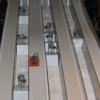
Echo Base Bobsleds
Source Institutions
The goal of this activity is to build a miniature bobsled that is either the fastest or the slowest. Learners use recycled materials to design, build, and test their bobsled on a bobsled track.
How Many In a Minute
Source Institutions
In this activity, learners will keep track of how much they can do in one minute. Instructors can pick something everyone will do for a minute, such as jumping up and down or drawing stars.
Cup Sailing Game
Source Institutions
In this online Flash game, learners will captain a sailing challenge, adjusting boat direction and sails, seeking the way to take greatest advantage of varying wind speeds and directions to catch the
Crunch Time
Source Institutions
In this quick and easy activity and/or demonstration, learners use two empty 2-liter bottles and hot tap water to illustrate the effect of heat on pressure.