
Search Results
Showing results 1 to 20 of 31
Throw Your Weight Around
Source Institutions
During this activity, learners take part in a variety of tasks which involve moving and balancing different body parts.
"Baseketball": A Physicist Party Trick
Source Institutions
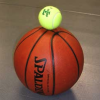
This trick from Exploratorium physicist Paul Doherty lets you add together the bounces of two balls and send one ball flying.
Mid-Air Maneuver: Skateboard Science
Source Institutions
To understand how skaters turn in midair, try this little experiment! Individuals can do this activity alone, but it works better with a partner.
The Pulse of Gravity
Source Institutions
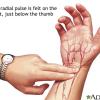
In this astronomy activity (page 3 of the PDF), learners will examine the effects of gravity on a person’s pulse and explore how gravity can differ from planet to planet.

Olympic Track Meet
Source Institutions
In this activity, learners discover how exercise helps keep the body healthy. Learners increase their heart rates by running and understand how running fast versus walking affects their pulse rates.
Thrown For A Curve: Pitch Like A Big Leaguer
Source Institutions
You may have tried to throw a curveball or a slider, or even a screwball, with an ordinary baseball and found it difficult to do.
Finding the Sweet Spot
Source Institutions
In this activity, learners will discover how to find the "sweet spots" on a baseball bat. Whenever an object is struck, it vibrates in response.
Strike 'em Down & Add 'em Up!
Source Institutions
In this activity, reuse two-liter bottles to create bowling pins. Learners practice math skills and develop a concept of verifying answers, while bowling and keeping score.
Think Fast!: Just How Quick Are You?
Source Institutions
This is an activity about reaction times. Just how quickly must an NHL goalie respond to save a shot, and how does your reaction time compare?
Just a Minute
Source Institutions
How much can you do in one minute? In this activity, learners estimate how many times a partner can complete a task (like writing their name or jumping jacks) in one minute.
What Counts in Bounce
Source Institutions
In this activity learners compare the bounciness of warm and cold racquetballs to see if temperature makes a difference in how well they bounce.
Work for Your Money
Source Institutions
In this math activity, learners earn "money" by completing simple tasks. Learners complete as many "jobs" as possible in a set amount of time.

Jump Like a Frog
Source Institutions
In this math activity, learners jump and measure how far they can jump on different surfaces using different jumping techniques.
Ins and Outs of Respiration: Determine your Respiratory Rate
Source Institutions
Learners will determine their respiratory rate and explore the factors that affect breathing rate by filling out and using the Respiratory Chart provided in the lesson.
Bouncing Balls
Source Institutions
When baseball was in its infancy, the ball had plenty of bounce. Today's baseball may not seem to have bounce to it at all; if you drop a ball on the field it won't bounce back.
Clothespin Workout
Source Institutions
This is a great activity about human energy production. Learners will work out with a clothespin to investigate why hockey players jump on a stationary bike after an intense game.

Hunger Signals
Source Institutions
This game explores the different reasons we choose to eat, and helps us be aware of when our body needs food and when it does not.
Right Foot/Left Foot
Source Institutions
In this activity (2nd on the page), learners conduct a series of tests to find out which foot is more dominant. In other words, are they right-footed or left-footed?
Stepping Out: Hop, Skip, Jump
Source Institutions
In this activity, learners explore and experiment how we can use our bodies everyday to get from one place to another.

Pulse of Life: Measure Your Pulse
Source Institutions
In this activity, learners take their own pulse and explore how heart rate is affected by various activities.