
Search Results
Showing results 1 to 20 of 47
Ball Bounce Experiment
Source Institutions
In this activity, learners investigate the properties of different types of balls.
CyberOlympic Card Game
Source Institutions
In this Cyberchase activity, learners use numbers to create CyberOlympic teams with the fastest times.

Hockey Stick Power!
Source Institutions
This activity (on page 2 of the PDF under SciGirls Activity: Hockey) is a full inquiry investigation into how a hockey stick’s flex affects shooting power and accuracy.

Basketball
Source Institutions
In this math activity (Page 14 of the Play Ball! PDF), learners play a game of "basketball" and analyze the results of the game.
Football
Source Institutions
In this math activity (Page 10 of the Play Ball! PDF), learners play a game of "football" and analyze the results of the game.
Soccer
Source Institutions
In this math activity (Page 12 of the Play Ball! PDF), learners play a game of "soccer" and analyze the results of the game.
Baseball
Source Institutions
In this math activity (Page 17 of the Play Ball! PDF), learners play a game of "baseball" and analyze the results of the game.

Batter Up!
Source Institutions
This activity (on page 3 of the PDF under GPS: Baseball Activity) is a full inquiry investigation into how "bounciness" relates to the distance a ball will fly when hit off a batting tee.
Neural Network Signals
Source Institutions
In this activity, learners create an electrical circuit and investigate how some dissolved substances conduct electricity.

Jump Like a Frog
Source Institutions
In this math activity, learners jump and measure how far they can jump on different surfaces using different jumping techniques.
Ins and Outs of Respiration: Determine your Respiratory Rate
Source Institutions
Learners will determine their respiratory rate and explore the factors that affect breathing rate by filling out and using the Respiratory Chart provided in the lesson.
Right Foot/Left Foot
Source Institutions
In this activity (2nd on the page), learners conduct a series of tests to find out which foot is more dominant. In other words, are they right-footed or left-footed?

Pulse of Life: Measure Your Pulse
Source Institutions
In this activity, learners take their own pulse and explore how heart rate is affected by various activities.
Workin' It Out
Source Institutions
In this activity, learners explore how to stay fit the fun way. Learners participate in three physical activities.

Relative Speed of Dinosaurs
Source Institutions
In this activity, learners interpret three trackways and use measurements and a formula to infer the relative speed of dinosaurs.
Statistics: Whirlybirds
Source Institutions
In this math lesson, learners measure, predict and determine the frequency of an event as it relates to how close Whirlybirds land to a target.
Cardiac Hill
Source Institutions
In this outdoor activity linking human health to the environment, learners use their pulse rates as a measure of the effort expended in walking on different slopes.
Drinking Straw Pulse Measurer
Source Institutions
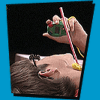
In this health activity, learners create a device so that they not only feel their heartbeat, but also see it, using a straw and some clay.
Right Hand/Left Hand
Source Institutions
In this activity (1st on the page), learners conduct a series of tests to find out which of their hands is more dominant. In other words, are they right-handed or left-handed?
Multi-Variable Relations: Stressed to the Breaking Point
Source Institutions
In this math lesson, learners explore the relationship between the thickness of a spaghetti bridge, the length of the bridge, and the amount of weight that can be supported by the bridge.