
Search Results
Showing results 21 to 40 of 53
Microarrays and Stem Cells
Source Institutions
In this activity, learners use microarray technology to determine which genes are turned on and off at various points in the differentiation of pluripotent stem cells on their way to becoming pancreat
Exploring Structures: DNA
Source Institutions
In this activity, learners create a necklace of wheat germ DNA. Learners add alcohol to wheat germ so that the DNA clumps together.
Protein Factory
Source Institutions
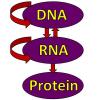
In this activity, learners take on the role of various parts of the cell in order to model the process of protein synthesis.
DNA Jewelry Models
Source Institutions
In this activity, learners construct a model of DNA to better understand the structure of DNA and protein synthesis.
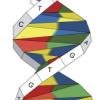
Origami DNA
Source Institutions
In this activity, learners create an origami model of DNA, demonstrating its double helix structure.
“Chips” Off the Old Block?
Source Institutions
In this activity, learners bake cookies by following different recipes to better understand genetic mutations. Everyone in the group bakes the same type of cookie: chocolate chip.
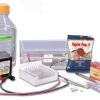
Colorful Electrophoresis
Source Institutions
In this activity, learners follow step-by-step instructions to build a gel electrophoresis chamber using inexpensive materials from local hardware and electronic stores.
A Recipe for Traits
Source Institutions
In this genetics activity, learners create and decode a “DNA recipe” for a dog by randomly selecting strips of paper that represent DNA.

Stem Cell Differentiation Game
Source Institutions
This game uses a modified Uno deck to review concepts related to stem cell research and diabetes.
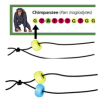
Sequence Bracelets
Source Institutions
In this craft-based activity, learners make DNA sequence bracelets that carry the code of an organism such as a human, trout, chimpanzee or butterfly.
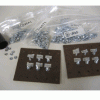
Macro-Microarray
Source Institutions
In this activity, learners explore the "nuts and bolts" of gene chips.
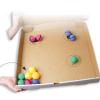
Macromodel of Microarray
Source Institutions
This is an educator-led demonstration of microarray technology using a model created from a pizza box and ping-pong balls.
How to Extract DNA From Anything Living
Source Institutions
In this genetics activity, learners discover how to extract DNA from green split peas.

Life Size: What's in a microbe?
Source Institutions
In this activity on page 3 of the PDF, learners visualize the relative size and structural differences between microbes that have the potential to cause disease.
Isolation of DNA from Onion
Source Institutions
This laboratory exercise is designed to show learners how DNA can easily be extracted from onion cells. It includes an optional test for the presence of DNA.

Secret Codon
Source Institutions
In this activity, "write" a secret message in genetic code as beads on a string.
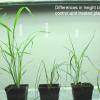
Effect of Environment on Plant Growth
Source Institutions
The purpose of this plant biotechnology activity is to demonstrate the effect of changes in the environment on the growth and fertility of landscape grasses and crop grasses such as wheat and rice.

Born of Blood: Craft Stick Chromosomes
Source Institutions
In this activity, learners work in groups to match craft sticks that represent chromosomes. Learners must define critical attributes of their chromosomes as they look for matching chromosomes.
DNA Detective
Source Institutions
This activity is about collecting and analyzing DNA as part of a criminal investigation.

Gel Electrophoresis
Source Institutions
In this activity, learners simulate the process of DNA fingerprinting by using electricity to separate colored dyes.