
Search Results
Showing results 1 to 20 of 43
The Scoop on Habitat
Source Institutions
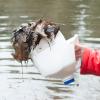
Some aquatic organisms live in open water, while some live in soil at the bottom of a body of water.
Underwater ROV
Source Institutions
In this online Flash game, learners will explore a coral reef using an underwater remotely operated vehicle (ROV).
Animal Diversity
Source Institutions
In this outdoor activity, learners find, count and compare as many different kinds of animals as they can find in two different areas: a managed lawn and a weedy area.
Wetlands
Source Institutions
Learners create a model of a wetland to observe how it absorbs and filters water from the environment.
Life in a Nutshell
Source Institutions
In this multi-faceted game (on pages 25-35), learners recreate what happens to creatures in the Brazilian rain forest as they grow from egg to adult—especially those that use fallen, empty Brazil nut
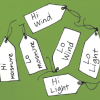
Sensory Hi-Lo Hunt
Source Institutions
In this outdoor activity, learners use only their senses to to find the extremes of several environmental variables or physical factors: wind, temperature, light, slope and moisture.
The Sharp Eyes of a Naturalist
Source Institutions
In this creative activity, learners will practice looking carefully to observe details and to become familiar with dioramas as a method for displaying naturalistic scenes.
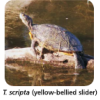
What's in the Water?: Biotic and Abiotic Elements in Aquatic Ecosystems
Source Institutions
In this investigation learners explore the differences between, and interdependence of, living and nonliving elements in a water ecosystem.
Shapes and Colors and Textures, Oh My!
Source Institutions
This is an activity about discovering the colors and beauty of nature. Learners will spend time outdoors, matching paint chip samples, colored paper, or colors of clothing to those found in nature.
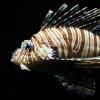
Fishy Observations
Source Institutions
In this activity (page 1 of the PDF under SciGirls Activity: Rabbits), learners will visit a zoo, aquarium, or pet store to view a variety of fish.
Biodiversity of Feet
Source Institutions
This activity (on page 3 of the PDF under GPS: Biodiversity Activity) is a full inquiry investigation into biodiversity.
Create a Mangrove Tree
Source Institutions
In this group activity, learners will explore the characteristics, functions and uniqueness of the mangrove tree.
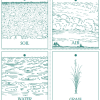
Habitat Web
Source Institutions
In this activity, learners explore the web of connections among living and non-living things.
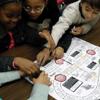
Endangered!
Source Institutions
While playing a game, learners discover how the Endangered Species Act works in the United States. Learners move along a game board by answering questions correctly.
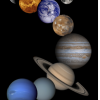
Habitable Worlds
Source Institutions
In this group activity, learners consider environmental conditions—temperature, presence of water, atmosphere, sunlight, and chemical composition—on planets and moons in our solar system to determine

Scram or Freeze
Source Institutions
In this outdoor activity and animal-role-play game, learners discover and uncover the hidden world of "cryptozoa"—organisms such as spiders, salamanders and slugs that live under objects, like rocks a
Can Fishing
Source Institutions
In this outdoor activity, learners go "can fishing" and discover the kinds of aquatic organisms that live in and on submerged cans.
Freshwater Ecosystems
Source Institutions
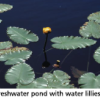
In this activity, learners create a freshwater ecosystem in a large plastic bottle. Learners cut and prepare bottles, then fill with water, aquatic plants, snails and fish.
Butterflies in Space
Source Institutions
The Butterflies in Space Teacher's Guide uses "life in space" to encourage learners to conduct their own open-ended scientific investigations.
Rain Forest in Your Room
Source Institutions
This activity (on pages 19-24) introduces learners to the rain forest's layers—emergent, canopy, understory, and forest floor—and has learners make paper lianas (vines that live attached to trees) and