
Search Results
Showing results 1781 to 1800 of 2375

Getting Your Bearings
Source Institutions
In this activity, learners explore the concept of friction and how ball bearings reduce friction.
Base Station Walk-Back
Source Institutions
In this activity, learners will train to improve lung, heart, and other muscle endurance as they walk a progressive, measured distance.
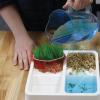
Exploring Earth: Land Cover
Source Institutions
This activity models some of the ways natural processes, such as erosion and sediment pollution, affect Earth’s landscape.
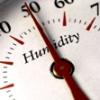
Making Sense of Sensors
Source Institutions
In this activity, learners explore sensors and focus specifically on how to measure humidity using a sensor.
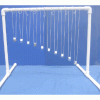
Pendulum Snake
Source Institutions
In this physics activity, learners assemble and/or investigate a pendulum "snake." Several large steel hex-nuts are suspended on strings of successively increasing length to form a series of pendulums
Right Eye/Left Eye
Source Institutions
In this activity (3rd on the page), learners conduct a series of tests to find out which of their eyes is more dominant.
Catapult
Source Institutions
In this activity about transfer of energy, learners get to build their own catapult using nothing more than a plastic spoon and some tape.
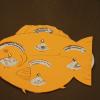
Fish Wheels
Source Institutions
In this activity, learners cut out and assemble wheels to explore how variations in fish body structures (mouth shape/position/teeth, body shape, tail shape, and coloration patterns) allow fish to sur
Chain Reaction II
Source Institutions
In this hands-on activity, learners use an assortment of (mainly household) items to complete Rube Goldberg-type challenges.
Test Density with a Supersaturated Solution
Source Institutions
Learners create three solutions with different levels of salinity. They compare the density of these solutions by coloring them and layering them in a clear plastic cup and in a soda bottle.

Edible Earth
Source Institutions
In this activity, learners make a model of the solid Earth's layers that's good enough to eat! Learners use tasty foodstuffs to simulate Earth's inner core, outer core, mantle, and crust.
Dive into Design
Source Institutions
Based of the The Tech Challenge 2015, learners will engage in two mini-design challenges related to seismic engineering.
Telescopes as Time Machines
Source Institutions
This fun, nighttime hands-on astronomy activity lets learners explore how long it takes for light from different objects in the universe to reach Earth.
Don't Stop for Hitchhikers
Source Institutions
In this activity, learners role-play the part of lake inhabitants and the aquatic exotics who displace the native species.
Harmless Holder
Source Institutions
Have you noticed the plastic rings that are used to hold six-packs of soda? Those rings are great for carrying cans, but they're real trouble when they become trash that animals can get tangled in.
Irrigation Ideas
Source Institutions
In this activity, learners explore how civil engineers solved the challenge of moving water via irrigation.
Exploring the Universe: Static Electricity
Source Institutions
This activity encourages visitors to build an electroscope—a simplified version of one of the tools scientists use to study the invisible forces on Earth and in space.
Magnus Glider
Source Institutions
A design challenge that takes paper airplanes into an entirely different direction: a magnus glider uses cups and and rubber bands to create a glider that uses the same forces that a curveball (from b
Sand Activity
Source Institutions
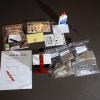
In this activity, learners observe mixtures of sand samples glued to note cards, and consider how sand can differ in size, shape, and color, and where it comes from.

Exploring the Solar System: Pocket Solar System
Source Institutions
“Exploring the Solar System: Pocket Solar System” is a hands-on activity in which visitors make a scale model of the distances between objects in our solar system.