
Search Results
Showing results 1 to 20 of 126
Digestion
Source Institutions
In this food science activity, learners explore digestion and proteins by observing the action of meat tenderizer on luncheon meat.
DNA Extraction
Source Institutions
In this activity related to plant biotechnology, learners extract DNA from fruit to investigate how it looks and feels.
Is That DNA in My Food?
Source Institutions
In this activity, learners extract DNA from wheat germ. Use this activity to introduce learners to DNA, biotechnology and genetic engineering.
Find the Fat
Source Institutions
Fat is a very important component in our diet. It's the most efficient source of energy in our bodies, and plays an important role in the flavor of foods.
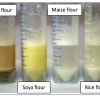
Wheat Evolution: Sedimentation Testing
Source Institutions
In this activity (Page 30 of PDF), learners investigate the evolution of wheat by conducting sedimentation tests on different flours.
Animal & Plant Cell Slides
Source Institutions
In this activity, learners make slides of onion cells and their own cheek cells. Use this lab to teach learners how to prepare microscope slides and use a microscope.

Bready Bubble Balloon
Source Institutions
Learners discover the bubble power of living cells in this multi-hour experiment with baker's yeast. Learners make a living yeast/water solution in a bottle, and add table sugar to feed the yeast.

Mold Growth
Source Institutions
In this activity learners observe mold growth on different types of bread by measuring and recording the growth rate.
DNA From an Onion
Source Institutions
In this genetics activity, learners extract DNA from an onion, using detergent solution, a food processor, and rubbing alcohol. They will also discuss genetic engineering of plants.
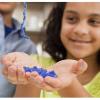
Gummy Shapes
Source Institutions
In this activity, learners use chemistry to “self-assemble” gummy shapes. Learners discover that self-assembly is a process by which molecules and cells form themselves into functional structures.
Chew that Gum
Source Institutions
In this quick activity (page 1 of PDF under SciGirls Activity: Exercise and Memory), learners will investigate what happens to bubble gum when it is chewed for 5-10 minutes.
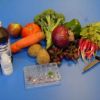
Plant Power
Source Institutions
In this chemistry challenge, learners identify which plants have the enzyme "catalase" that breaks hydrogen peroxide into water and oxygen.
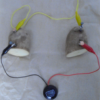
Making a Battery from a Potato
Source Institutions
In this electrochemistry activity, young learners and adult helpers create a battery from a potato to run a clock.
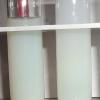
Testing for Life's Molecules
Source Institutions
In this activity, learners conduct tests for proteins, glucose, and starch.
Invisible Ink
Source Institutions
In this simple chemistry activity (page 1 of PDF under SciGirls Activity: Colorblind Dogs) about acids and bases, learners will mix a baking soda and water solution and use it to paint a message on a
Mold Terrarium: What Grows on Leftover Food?
Source Institutions
This activity shows you how to make a mold terrarium using a jar and leftover food.
Tobacco Mosaic Virus
Source Institutions
In this four-part laboratory exercise, learners investigate properties of Tobacco mosaic virus (TMV) including (1) symptoms induced by the virus in susceptible plants at the macroscopic and microscopi
DNA Nanotechnology
Source Institutions
In this activity, learners explore deoxyribonucleic acid (DNA), a nanoscale structure that occurs in nature.
Mapping Sea Level Rise
Source Institutions
In this activity related to climate change, learners create and explore topographical maps as a means of studying sea level rise.
Amphibian Skin
Source Institutions
In this activity, learners explore the concept of permeability to better understand why amphibians are extremely sensitive to pollution.