
Search Results
Showing results 1 to 20 of 28
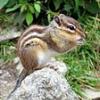
Ask an Elder
Source Institutions
In this activity, learners listen to a story and tell a story of their own as they learn about the importance of elders in Native American cultures.
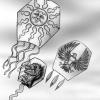
Sled Kite
Source Institutions
In this activity, learners build a sled kite that models a type of airfoil called a parawing.
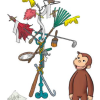
As Straight as a Pole
Source Institutions
In this engineering activity (page 3 of PDF), young learners investigate how a pole can be made stable by “planting” its base in the ground or adding supports to the base.
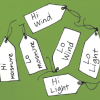
Sensory Hi-Lo Hunt
Source Institutions
In this outdoor activity, learners use only their senses to to find the extremes of several environmental variables or physical factors: wind, temperature, light, slope and moisture.
Space Stations: Measure Up!
Source Institutions
In this activity, learners work in pairs to measure each other's ankles with lengths of string.
Kites
Source Institutions
In this engineering/design activity, learners make a kite, fly it, and then work to improve the design. Learners explore how their kite design variations affect flight.
Work Up An Appetite
Source Institutions
In this activity, learners participate in fun movement activities while playing on a giant game board. Use this activity to get learners involved in physical activity.
Shapes and Colors and Textures, Oh My!
Source Institutions
This is an activity about discovering the colors and beauty of nature. Learners will spend time outdoors, matching paint chip samples, colored paper, or colors of clothing to those found in nature.
Gravity and Muscles
Source Institutions
In this activity about center of gravity (page 23 of PDF), learners investigate how the body adjusts to the force of gravity to remain balanced.
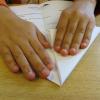
Family Flyers
Source Institutions
In this activity, learners work in teams to build and test paper airplanes. Learners try to fly their airplanes directly on the runway and earn points for accuracy.

Statistics: Steppin' Out
Source Institutions
In this math lesson, learners construct box-and-whisker plots to analyze and compare data sets. Learners investigate whether or not long-legged people run faster than short-legged people.
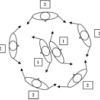
Exploring Fabrication: Self-Assembly
Source Institutions
In this activity, learners participate in several full-body interactive games to model the process of self-assembly in nature and nanotechnology.
Good Stress
Source Institutions
In this activity about physical stress (page 28 of PDF), learners discover that muscles and bones need to work to stay strong.
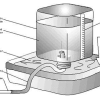
Catch Your Breath: Build a Spirometer and Measure your Lung Capacity
Source Institutions
In this activity, learners will measure their lung capacity by making their own spirometer. Learners will then explore factors that affect the amount of air the lungs can hold.
Seeing the World Through a Different Lens
Source Institutions
Learners participate in a variety of activities modeling different disabilities.
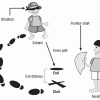
Find Your Way Around Without Visual or Sound Cues
Source Institutions
In this activity, learners play a series of simple games to investigate navigation without visual and sound cues.
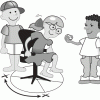
Vestibular-Ocular Reflex
Source Institutions
In this activity, learners will perform various investigations to understand the vestibular-ocular reflex and learn about the importance of visual cues in maintaining balance.
Pom-Pom Probability
Source Institutions
In this math activity, learners predict how many pom-poms they can toss inside a circle from three feet away. Use this activity to help learners explore probability.
Take It in Stride
Source Institutions
In this health and fitness activity, learners focus on the importance of daily physical activity, specifically walking.
Sky Floater Challenge
Source Institutions
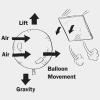
In this design challenge activity, learners make a balloon hover at eye level for five seconds, and then make it move by creating air currents.