
Search Results
Showing results 1 to 20 of 27
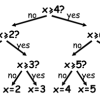
Twenty Guesses: Information Theory
Source Institutions
This activity introduces the idea that computer scientists measure information by how "surprising" a message is.
What's the Difference?
Source Institutions
In this sorting activity, learners play a game in which they try to identify the largest number of differences between two objects.
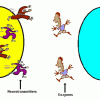
Synaptic Tag
Source Institutions
In this outdoor activity, learners review the parts of the synapse and their functions by playing a game.
Metamorphosis Matching
Source Institutions
This is an activity where learners will compare the different metamorphosis stages of amphibians.
The Sharp Eyes of a Naturalist
Source Institutions
In this creative activity, learners will practice looking carefully to observe details and to become familiar with dioramas as a method for displaying naturalistic scenes.

Make a Human Scale Ladder
Source Institutions
In this quick activity about size and scale (on page 2 of the PDF under What's Nano?

Building Bingo
Source Institutions
In this on site "field trip" activity (located on pages 6-9 of PDF), learners get hands-on experience identifying building materials by playing "Building Bingo".

Dicey Directions
Source Institutions
In this game, learners are stuck in a right turn only world! Learners take turns rolling a die and moving their game pieces along the lines of a grid to get "home," by only making right turns.

The Carbon Cycle: How It Works
Source Institutions
In this game, learners walk through an imaginary Carbon Cycle and explore the ways in which carbon is stored in reservoirs and the processes that transport the carbon atom from one location to another
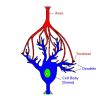
Neuron Chain Tag
Source Institutions
In this outdoor activity, learners play a game of Tag to discover how neurons attach themselves to each other to form a chain.
How Many In a Minute
Source Institutions
In this activity, learners will keep track of how much they can do in one minute. Instructors can pick something everyone will do for a minute, such as jumping up and down or drawing stars.
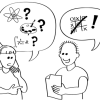
Artificial Intelligence: The Intelligent Piece of Paper
Source Institutions
This activity explores what it means for a computer to be intelligent and introduces the topic of what a computer program is and how everything computers do simply involves following instructions writ
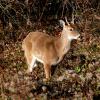
Population Study Game: Oh, Deer!
Source Institutions
In this activity, learners model a population of deer and see how the number of deer changes over time.
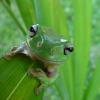
Caller ID: The Frog - and Toad! - Mating Game
Source Institutions
This activity is a sensory experience that recreates the sounds of a pond at night.
Fish Family Identification
Source Institutions
In this game, students will become familiar with fish shapes, learn that fish within a given taxonomic family have similar body shapes, and discuss how different body shapes enable fish to survive in
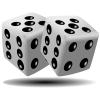
Probability: Remove One
Source Institutions
In this math lesson, learners are given 15 chips and a number line labeled from 2-12.
Make your own Antelope Horns!
Source Institutions
In this craft activity, learners will explore the structure and purpose of antelope horns by constructing their own headband using toilet paper rolls and yarn.
Take a Guess
Source Institutions
In this activity, learners use what they know about probability to figure out what is in a mystery bag. Learners analyze data to guess how many of each color crayons are in the bag.

Go Bug!
Source Institutions
By playing a card game similar to "Go Fish," but based on the stages of metamorphosis, learners will be able to see how insects change in form as they grow and will consider the advantages of undergoi
Building Fractions Game
Source Institutions
In this math lesson, learners investigate fractions by playing a game.