
Search Results
Showing results 941 to 960 of 2059
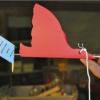
Chirping Bird
Source Institutions
In this activity, learners build a cuica or chirping bird using straw, string, and a bottle cap. Use this activity to explore the interplay of motion and sound.
Heat Capacity: Can't Take the Heat?
Source Institutions
Why is ocean water sometimes the warmest when the average daily air temperature starts to drop? In this activity, learners explore the differing heat capacities of water and air using real data.
Fireworks in a Glass
Source Institutions
In this activity, learners use water, oil, and food coloring to observe a chemical reaction that creates a shower of colors inside of a glass.
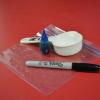
DIY Science: Water Cycle in a Bag!
Source Institutions
In this activity, learners will simulate the processes of the water cycle at home in a plastic sandwich bag.
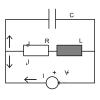
Wire Maze
Source Institutions
Learners create an electrical-circuit maze out of wire, then try to pass a paperclip through the maze without touching the wire.
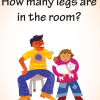
Mixing in Math Moments: Several 5-10 Minute Math Activities
Source Institutions
This website contains several activities. Mixing in Math Moments are activities that take 5-10 minutes that keep learners occupied, learning about the world, and using math on their own.
Team Up: Fun With Division
Source Institutions
In this activity, learners will divide into teams or groups of equal size. “How many teams of three can we make?” “We need an equal number of children at each of the four computers.

Wax 'n Wash
Source Institutions
In this activity, learners create secret messages using a candle. Learners discover that watercolor paint is attracted to some materials, like paper fibers, but not others, like oil.
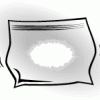
Bubble Bomb
Source Institutions
Learn about chemical reactions by making a Bubble Bomb, a plastic bag you can pop with the power of fizz.
Ins and Outs of Respiration: Determine your Respiratory Rate
Source Institutions
Learners will determine their respiratory rate and explore the factors that affect breathing rate by filling out and using the Respiratory Chart provided in the lesson.
Animal Reflection Response
Source Institutions
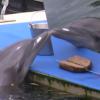
In this activity (page 1 of the PDF under SciGirls Activity: Horse Ears), learners observe how an animal responds to its own reflection.
Cardboard Box Camera Obscura
Source Institutions
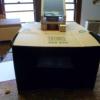
In this activity, learners construct a device that projects images onto a surface, so they can trace landscapes and other sights.
Sweat Spot
Source Institutions
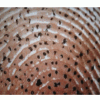
In this activity, learners use a chemical reaction to visualize where moisture forms on the body.

Release the Rainbow
Source Institutions
In this activity, learners create a water prism to break light into the seven colors of the rainbow.
Discovery Time: Turtles
Source Institutions
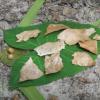
In this activity, young learners (2 years and up) explore turtle basic adaptations and biology. Turtle external anatomy is explored by "building" a turtle with a nature collage.
Globby Gooey Gak
Source Institutions
In this activity, learners concoct some stretchy green goo called Gak. This activity will introduce learners to polymers, chemical reactions, and how scientists invent new materials.
Sock Garden
Source Institutions
In this activity (located in the middle of the page), learners start a garden by planting their socks!
Cryptographic Protocols: The Peruvian Coin Flip
Source Institutions
This activity about cryptographic techniques illustrates how to accomplish a simple, but nevertheless seemingly impossible task—making a fair, random choice by flipping a coin between two people who d
Exploring Structures: Butterfly
Source Institutions
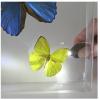
In this activity, learners investigate how some butterfly wings get their color.
Chemical Methods of Control
Source Institutions
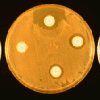
In this lab, learners evaluate the relative effectiveness of various chemical substances (i.e. garlic powder, bathroom cleaner, mouthwash, etc.) as antimicrobial agents.