
Search Results
Showing results 81 to 100 of 131
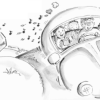
FAMILY MATH on the Go
Source Institutions
This assortment of mathematical games can be played while traveling.
Pass or Roll!
Source Institutions
In this math activity, learners play a game in which every roll can earn you counters, but if you roll the wrong number (6), you have to put everything back.
Penny Estimation
Source Institutions
In this math activity, learners estimate how many pennies are in a jar by predicting and counting handfuls of pennies.

Size It Up
Source Institutions
In this artistic activity, learners blow up a smaller picture into a larger one, by using a grid.
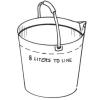
Metric Capers
Source Institutions
In this outdoor activity, learners measure familiar objects in nature to practice working with the metric system.
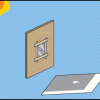
Finding the Size of the Sun and Moon
Source Institutions
In this activity, learners build a simple pinhole viewer. They use this apparatus to project images from a variety of light sources, including a candle, the Sun, and the Moon.
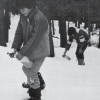
Scent Tracking
Source Institutions
In this wintertime outdoor activity, learners role play wolves tracking their prey by following scented trails.
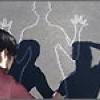
Changing Shadows
Source Institutions
In this sunny day, outdoor activity, learners observe changes in shadows over time. The activity also helps to develop a sense of the Earth's motion.
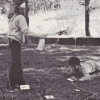
Silent Stalking
Source Institutions
In this outdoor game, learners role play predator and prey to explore the importance of keen hearing and silent stalking skills in the animal world.
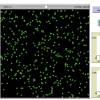
Evolution as Reproduction with Variability
Source Institutions
In this online activity, learners discover how random variation influences biological evolution.
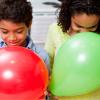
Smelly Balloons
Source Institutions
In this activity, learners sniff out scents hidden in balloons! After investigating, learners discover we sometimes can use another sense (smell) to detect things too small to see.

The Blindfolded Walk
Source Institutions
In this activity, learners work in teams to study the observation skills essential to scientific research.
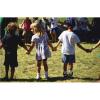
In the Middle
Source Institutions
In this game-like activity (5th activity on the page), learners explore their auditory acuity as well as the importance of having two ears.
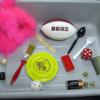
Mystery Box: Making Observations and Collecting Data
Source Institutions
This activity was designed for blind learners, but all types of learners can use it to learn to differentiate between qualitative and quantitative observations and to practice data collection.

Tasty Buds
Source Institutions
In this activity (1st activity on the page), learners explore their sense of taste and the structure of the tongue by taste-testing various foods.
Where Was That?
Source Institutions
In this activity (9th activity on the page), learners work in pairs to see how their perception of touch differs from reality.
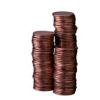
A Penny Saved is a Penny Heard
Source Institutions
In this activity (11th activity on the page), learners use pennies to test their hearing acuity.
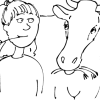
Rumination
Source Institutions
In this activity (on pages 24-34), learners explore the four-part stomach of cows (and other grazing animals called ruminants), and compare it to the human one-part stomach and its digestive process.
Soaring Towers: Building with Recycled Materials
Source Institutions
In this activity, learners will build the highest tower they can out of recycled materials.
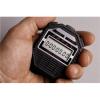
Built in Stopwatch
Source Institutions
In this activity (3rd on the page), learners investigate circadian rhythms by examining how well people do with estimating time.