
Search Results
Showing results 21 to 40 of 43
Math and Creativity Posters
Source Institutions
These math posters have questions written on them, such as: How many colors can you name in a minute? or How many seconds can you balance on one foot?
Screen Time
Source Institutions
This game asks you a series of questions about how much time you spend in front of a screen, not being active.

Pitch, Roll and Yaw: The Three Axes of Rotation
Source Institutions
In this activity (page 87 of the PDF), learners move their bodies to better understand the three axes of rotation: pitch, roll and yaw.
How Many In a Minute
Source Institutions
In this activity, learners will keep track of how much they can do in one minute. Instructors can pick something everyone will do for a minute, such as jumping up and down or drawing stars.
Slowing the Flow
Source Institutions
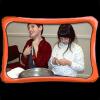
In this experiment, pairs of learners explore how cold water affects circulation. The mammalian diving reflex (MDR) slows circulation when the body is exposed to cold water.
Cup Sailing Game
Source Institutions
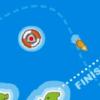
In this online Flash game, learners will captain a sailing challenge, adjusting boat direction and sails, seeking the way to take greatest advantage of varying wind speeds and directions to catch the
Crunch Time
Source Institutions
In this quick and easy activity and/or demonstration, learners use two empty 2-liter bottles and hot tap water to illustrate the effect of heat on pressure.
Filling the Time
Source Institutions
Build time sense into the schedule by asking learners to predict what can happen in a certain amount of time: We have 20 minutes before outdoor time. What can you get done?
Catch the Beat
Source Institutions
This is an activity about music, movement, and math. Learners will start a rhythm pattern with 2, 3, or 4 beats. For instance, tap your foot, jump, clap, repeat.
Exercise and Memory
Source Institutions
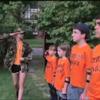
This activity (page 1 of the PDF under SciGirls Activity: Exercise and Memory) is a full inquiry investigation into the effects of exercise on short term memory.
Team Up: Fun With Division
Source Institutions
In this activity, learners will divide into teams or groups of equal size. “How many teams of three can we make?” “We need an equal number of children at each of the four computers.
Jump on Tens: Counting Fun
Source Institutions
Learners combine counting, multiples, and number patterns with jumping up and down. To start, pick a counting number.
Heart Rate and Exercise
Source Institutions
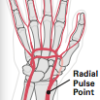
In this activity about heart health (on page 27 of the PDF), learners measure their heart rates after a variety of physical activities and compare the results with their resting heart rates, and with
Mission: Control!
Source Institutions
In this activity and game, learners will train to improve balance and spatial awareness by performing throwing and catching techniques on one foot.
Line Up: Using Math To Stand In Line
Source Institutions
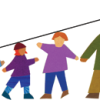
Put math of measurement into lining up — and make waiting in line fun. Choose a size characteristic that learners can physically compare, such as foot length or hair length.
Your Energy Needs
Source Institutions
In this activity about the relationship between food and energy (page 8 of PDF), learners estimate average daily baseline energy (Calorie) needs and energy needs for different levels of activity.
Mixing in Math Moments: Several 5-10 Minute Math Activities
Source Institutions
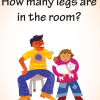
This website contains several activities. Mixing in Math Moments are activities that take 5-10 minutes that keep learners occupied, learning about the world, and using math on their own.
Momentos de Mixing in Math: Varias Actividades Matemáticas de 5 ó 10 Minutos
Source Institutions
Los Momentos de Mixing in Math son actividades de 5 a 10 minutos que mantienen a los chicos ocupados, aprendiendo sobre el mundo, y usando matemáticas por su cuenta.
Endurance: How Many Can You Do in a Row?
Source Institutions
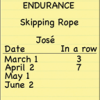
Combine math and exercise with this activity. Learners count how many times in a row they can skip rope or throw and catch a ball.
Crew Strength Training
Source Institutions
In this activity, learners will train to develop upper and lower body strength in their muscles and bones by performing body-weight squats and push-ups.