
Search Results
Showing results 1 to 20 of 25
Ins and Outs of Respiration: Determine your Respiratory Rate
Source Institutions
Learners will determine their respiratory rate and explore the factors that affect breathing rate by filling out and using the Respiratory Chart provided in the lesson.

Take It in Stride
Source Institutions
In this health and fitness activity, learners focus on the importance of daily physical activity, specifically walking.
Jump Start
Source Institutions
In this movement and measurement activity, learners jump as far as they can three times, and compare their longest jump to the longest jump of their friends, classmates and/or family members.
Stepping Out: Hop, Skip, Jump
Source Institutions
In this activity, learners explore and experiment how we can use our bodies everyday to get from one place to another.
Heart to Heart
Source Institutions
In this activity, learners compare ways to measure their heart rates. Learners build their own stethoscopes and learn how exercise affects heart rate.
Fitness Factor
Source Institutions
In this online activity, learners partner up to complete several physical exercises and assess their starting fitness level.
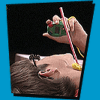
Drinking Straw Pulse Measurer
Source Institutions
In this health activity, learners create a device so that they not only feel their heartbeat, but also see it, using a straw and some clay.
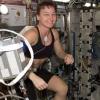
Space Stations: Beans in Space
Source Institutions
In this activity, learners perform 20 arm curls with cans that simulate the weight of beans on Earth versus the weights of the same number of beans on the Moon and in space.
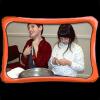
Slowing the Flow
Source Institutions
In this experiment, pairs of learners explore how cold water affects circulation. The mammalian diving reflex (MDR) slows circulation when the body is exposed to cold water.

Statistics: Steppin' Out
Source Institutions
In this math lesson, learners construct box-and-whisker plots to analyze and compare data sets. Learners investigate whether or not long-legged people run faster than short-legged people.
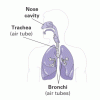
Heart and Lungs
Source Institutions
In this environmental health activity, learners investigate their breathing and pulse rates, and learn how these measurements are affected by physical activity.
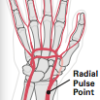
Heart Rate and Exercise
Source Institutions
In this activity about heart health (on page 27 of the PDF), learners measure their heart rates after a variety of physical activities and compare the results with their resting heart rates, and with
Cardio Comparisons
Source Institutions
In this activity, learners discover how their heart rate changes in different situations.
Mission: Control!
Source Institutions
In this activity and game, learners will train to improve balance and spatial awareness by performing throwing and catching techniques on one foot.
Line Up: Using Math To Stand In Line
Source Institutions
Put math of measurement into lining up — and make waiting in line fun. Choose a size characteristic that learners can physically compare, such as foot length or hair length.
Your Energy Needs
Source Institutions
In this activity about the relationship between food and energy (page 8 of PDF), learners estimate average daily baseline energy (Calorie) needs and energy needs for different levels of activity.
Good Stress
Source Institutions
In this activity about physical stress (page 28 of PDF), learners discover that muscles and bones need to work to stay strong.
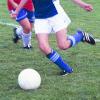
Soccer Kicks
Source Institutions
This activity (on page 2 of the PDF under SciGirls Activity: Soccer Ball Kick) is a full inquiry investigation into transfer of motion.

Crew Strength Training
Source Institutions
In this activity, learners will train to develop upper and lower body strength in their muscles and bones by performing body-weight squats and push-ups.
Do a Spacewalk!
Source Institutions
In this activity, learners train to increase muscular strength and improve upper and lower body coordination by performing the “bear crawl” and the "crab walk.” Learners perform the exercises over tim