
Search Results
Showing results 2141 to 2160 of 2375
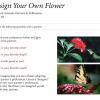
Design a Flower
Source Institutions
In this activity, learners learn about the adaptations that flowers have developed which support pollination. Learners also list their personal preferences (i.e.
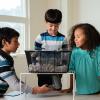
Exploring the Universe: Star Formation
Source Institutions
In this activity, participants will learn how stars form from the dust and gas that exists in space clumping together.
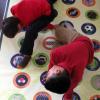
Exploring Size: StretchAbility
Source Institutions
In this game, learners explore the different sizes of things in the world. In this Twister-like game, learners must place a hand or foot on a circle of the right scale - macro, micro, or nano.

Magnetic Pendulums
Source Institutions
In this activity and demonstration about electricity and magnetism, learners observe how the current generated when one copper coil swings through a magnetic field starts a second coil swinging.
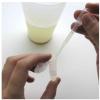
Exploring Structures: DNA
Source Institutions
In this activity, learners create a necklace of wheat germ DNA. Learners add alcohol to wheat germ so that the DNA clumps together.
Sizing Up the Universe
Source Institutions
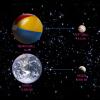
In this online interactive challenge, learners choose items to represent the Earth or solar system, then determine other items to represent the Moon, or Milky Way based on their relative size.
Clear Water, Murky Water
Source Institutions
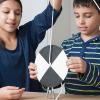
How do scientists measure how clear or murky water in a lake is? How does water clarity (clearness) affect what lives in the lake?
Angles and Area
Source Institutions
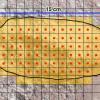
In this activity (page 10 of PDF), learners approximate the area of the uppermost cross section of an impact crater using a variety of square grids.
Draw a Monarch Butterfly: Scientific Illustration
Source Institutions
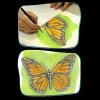
Ivy Rutzky, a scientific assistant at the American Museum of Natural History, introduces an activity where learners create a scientific illustration of a monarch butterfly.
Quick Questions: Learn About Data
Source Institutions
In this activity, learners will collect and analyze data to learn about the people around them. How many letters in everyone’s first name? What’s the most common number of letters?
Press Seaweed
Source Institutions
In this activity, learners will collect, dry and press seaweed over the course of four days in a similar way that artists/crafters press flowers.
Bury Me Not!
Source Institutions
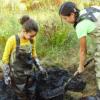
This activity (page 2 of the PDF under SciGirls Activity: Bogs) is a full inquiry investigation into decomposition.
Circulatory System Skit: Act out the Flow of Blood
Source Institutions
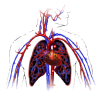
In this activity, learners act out the flow of blood in the human body! A great way to get learners up and moving while learning about the circulatory system.
So Many Parts
Source Institutions
In this online Flash game and spacewalk mission simulation, learners are challenged to repair parts of a space station while balancing their oxygen and fuel use carefully.
Stick to It: Adhesion II
Source Institutions
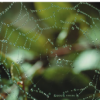
Water sticks to all kinds of things in nature — flowers, leaves, spider webs - and doesn't stick to others, such as a duck's back.
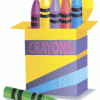
Resistance is Useful
Source Institutions
Learners write or draw with white crayon on white paper. They look and feel to detect their marks on the paper. Then, learners paint over their paper with watercolor paint.
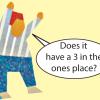
Mystery Number
Source Institutions
Combine logic and numbers in this game for all ages. Players start with a 10x10 grid of the numbers 1 to 100. One person chooses a secret number and announces the range in which it falls.
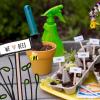
Egg Carton Nursery
Source Institutions
In this activity, young learners will make their own flower seed nursery in an egg carton.
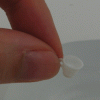
Exploring Forces: Gravity
Source Institutions
In this nanoscience activity, learners discover that it's easy to pour water out of a regular-sized cup, but not out of a miniature cup.
Freshwater Ecosystems
Source Institutions
In this activity, learners create a freshwater ecosystem in a large plastic bottle. Learners cut and prepare bottles, then fill with water, aquatic plants, snails and fish.