
Search Results
Showing results 661 to 680 of 2375
Racing M&M Colors
Source Institutions
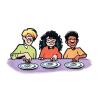
Learners design their own experiment to determine which M&M color dissolves the fastest in water.
It's all Done with Mirrors
Source Institutions
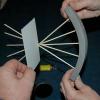
This fun and simple hands-on astronomy activity illustrates the path of light as it reflects off of mirrors and how this is used in telescopes.
Hover Cup
Source Institutions
Is this activity concentrating on physical science, learners build their very own miniature hovercraft out of a paper cup. Using it, they can explore the concepts of friction and force.
Monster Evolution
Source Institutions
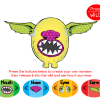
In this online activity, learners create monsters and see how they survived when released into the wild.
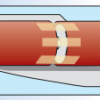
Another Bright Idea!
Source Institutions
In this activity on page 5 of the PDF, learners use their knowledge of energy and batteries to create homemade flashlights.
Build a Super Structure
Source Institutions
In this activity, learners use things from the kitchen as building materials to explore how shapes contribute to the strength of different structures.
Urine the Know
Source Institutions
In this activity on page 5 of the PDF, learners compare water with artificial urine to see how urinalysis works. Learners use urinalysis test strips to test for glucose and protein in the fake urine.
Why Are Two Eyes Better Than One?
Source Institutions
In this activity, learners explore how their depth perception would be affected if they only had one eye. Learners work in pairs and attempt to drop a penny in a cup with one eye covered.
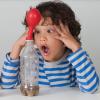
The Gas You Pass
Source Institutions
Although we may not admit it, all humans fart or pass some gas. In this activity, learners make their own model to mimic food passing through intestines and discover what releases gas.
Invisible Sunblock
Source Institutions
This is a hands-on activity exploring how nanoscale particles are used in mineral sunblocks to increase their transparency.
Shapes and Colors and Textures, Oh My!
Source Institutions
This is an activity about discovering the colors and beauty of nature. Learners will spend time outdoors, matching paint chip samples, colored paper, or colors of clothing to those found in nature.
Why do Raindrops Sometimes Land Gently and Sometimes Land with a Splat?
Source Institutions
In this activity, learners examine raindrop bottles (prepared ahead of time) to observe in slow motion the behavior of falling droplets and explore concepts such as drag and terminal velocity.
Solve The Fall
Source Institutions
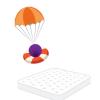
In this twist on a classic design challenge, learners will try to stop a bouncy ball from bouncing as they explore how to control the fall of an object.
A Crayon Rock Cycle- Metamorphic
Source Institutions
This is part 2 of the three-part "Crayon Rock Cycle" activity and must be done after part 1: Sedimentary Rocks. In this activity, learners explore how metamorphic rocks form.
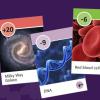
Exploring Size: Powers of Ten
Source Institutions
In this activity, learners play a card game that explores the relative sizes of various objects. Learners compete to organize their hand of cards into lists of objects from largest to smallest.
Smell the Difference
Source Institutions
In this two-part activity, learners use household items to smell the difference between some stereoisomers, or molecules which are mirror images of one another.
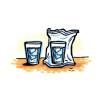
Exploring Moisture on the Outside of a Cold Cup
Source Institutions
In this activity, learners explore the relationship between cooling water vapor and condensation. Learners investigate condensation forming on the outside of a cold cup.

Beach Finds Curiosity Cart
Source Institutions
In this activity, learners observe hard parts of sea creatures (shells, molts, etc.) to better understand marine environments.
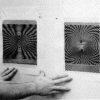
Moiré Patterns
Source Institutions
In this activity about light and perception, learners create and observe moire patterns.
Exploring Size: Measure Yourself
Source Institutions
In this activity, learners mark their height on a height chart and discover how tall they are in nanometers.