
Search Results
Showing results 1 to 20 of 62
Modeling Day and Night
Source Institutions
In this activity (on page 1 of the PDF), learners make a "mini-globe" to investigate the causes of day and night on our planet.
Meteoroids and the Craters They Make
Source Institutions
In this activity, learners investigate the formation of craters. Learners will examine how the size, angle and speed of a meteorite's impact affects the properties of craters.

Drain Game
Source Institutions
In this activity (on pages 36-39), learners make a model of a watershed out of paper, then run water down the mountain to simulate how rainfall and pollution affect watersheds.
Be a Scanning Probe Microscope
Source Institutions
In this activity, learners investigate Scanning Probe Microscopes (SPM) and then work in teams using a pencil to explore and identify the shape of objects they cannot see, just as SPMs do at the nano

Shape Up!
Source Institutions
In this activity (25th on the page) about learning and memory, learners explore a training method that animal trainers employ called "shaping." Working in pairs, learners will attempt to "shape" each
Wetlands
Source Institutions
Learners create a model of a wetland to observe how it absorbs and filters water from the environment.
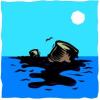
Oil Spill Cleanup
This hands-on experiment will provide learners with an understanding of the issues that surround environmental cleanup.
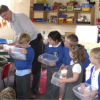
Natural Selection of Antibiotic Resistant Bacteria
Source Institutions
In this activity (p.3-4 of PDF), learners learn about disease transmission and antibiotic resistance.
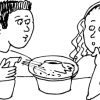
Vanishing Craters
Source Institutions
In this activity (on pages 12-15), learners make a crater model and test the effects of weather (rain) on its surface.
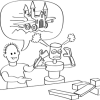
Programming Languages: Harold the Robot
Source Institutions
In this activity related to computer programming, learners give directions to a "robot" (either an adult or another learner) and find out which instructions the robot is able to follow, and how their
Tracking Otters
Source Institutions
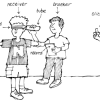
This activity (on pages 38-43) has learners simulate the way scientists track and map the movement of otters in the wild using radio trackers.
Exploring at the Nanoscale
Source Institutions
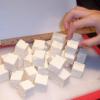
This lesson focuses on how nanotechnology has impacted our society and how engineers have learned to explore the world at the nanoscale.
Chances Are: OH NO! Look Out Below for a UFO
Source Institutions
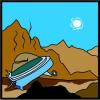
In this math lesson (on Page 13), learners predict and simulate the likelihood of an event occurring.
Design a Park
Source Institutions
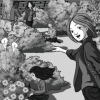
In this activity, learners are invited to imagine the park of their dreams!
How Animals Stay Warm
Source Institutions
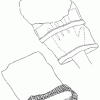
In this quick activity, learners explore how blubber protects animals from the cold by making a "blubber mitt." Using cooking shortening, two zip-top sandwich bags, and duct tape, learners simulate bl
Size and Scale: Probing and Predicting
Source Institutions
In this quick activity about predicting (located on page 2 of the PDF under Where's Nano?

Walk On Water Bugs
Source Institutions
In this activity (on pages 29-35), learners examine water pollution and filtration.
Make An Impact
Source Institutions
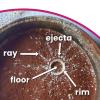
In this hands-on activity, learners simulate the crashing and smashing of a meteor impact using household cooking supplies.
Regolith Formation
Source Institutions
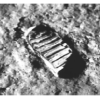
In this three-part activity, learners use food to determine the effects of wind, sandblasting and water on regolith (dust) formation and deposition on Earth.
X-Ray Spectra
Source Institutions
In this activity, learners use simple materials to simulate the effect of X-rays in a safe way. Learners place a piece of window screen over a box and a cardboard pattern on top of the screen.