
Search Results
Showing results 141 to 160 of 193
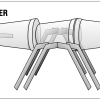
Minibeast Models
Source Institutions
In this activity, learners create models of bugs. Learners use household materials like plastic cups and straws to create models of bugs like centipedes and spiders.
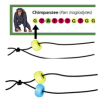
Sequence Bracelets
Source Institutions
In this craft-based activity, learners make DNA sequence bracelets that carry the code of an organism such as a human, trout, chimpanzee or butterfly.
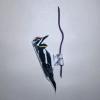
Oscillating Woodpecker
Source Institutions
In this activity, learners will experiment with the physics of forces - kinetic energy and friction while making a moving toy woodpecker.
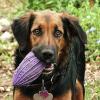
Colorblind Dogs
Source Institutions
This activity (on page 2 of the PDF under SciGirls Activity: Colorblind Dogs) is a full inquiry investigation into dogs' ability (or inability) to see color.
Wolf Survival is Just a Roll Away
Source Institutions
In this simulation activity, learners will raise a pack of wolves under ten different conditions: without human interference and with human interference.

Chilean Sea Bass: Off the Menu
Source Institutions
In this data analysis activity, learners use data collected by the Commission for the Conservation of Antarctic Marine Living Resources (CCAMLR) to study Chilean sea bass populations.
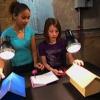
Doghouse Design
Source Institutions
This activity (on page 2 of the PDF under SciGirls Activity: Doghouse Design) is a full inquiry investigation into absorption and reflection of radiant energy.
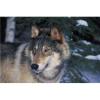
Wolf Limiting Factors
Source Institutions
In this activity, learners simulate a wolf and its habitat and observe what happens when the limiting factors change over time.
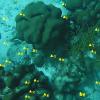
Coral Snapshots: Biodiversity in Marine Protected Areas
Source Institutions
In this data activity, learners analyze data from coral reef snapshots taken by scientists at the Virginia Institute of Marine Science.
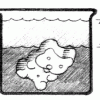
Gummy Growth
Source Institutions
In this activity related to Archimedes' Principle, learners use water displacement to compare the volume of an expanded gummy bear with a gummy bear in its original condition.
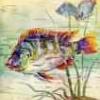
Is it a Fish?
Source Institutions
This activity is on page 8 of the pdf, part of the Sea Life Discovery Box. This is an activity exploring the characteristics of fish.
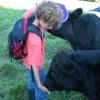
Virtual Farm Management
Source Institutions
This activity (located on page 3 of the PDF under GPS: Farm Animals Activity) is a full inquiry investigation into raising livestock.
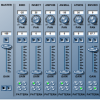
Build a Soundscape
Source Institutions
This is a virtual representation of a sound mixer containing pre-looped sounds of animal, insect, and environmental noises.

Polar Bear Glove
Source Institutions
In this activity, learners will explore how animal in cold areas stay warm.
Animal Math Posters
Source Institutions
These math posters have questions written on them, such as: How fast can a cheetah run? or How long can a giant tortoise live? Post these around the room or leave them out for children to explore.
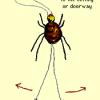
Spider Glider
Source Institutions
In this fun activity about spiders, learners build and design a spider from cardstock, straw, string, and pipe cleaners.
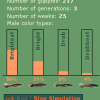
Flashy Fish
Source Institutions
Professor John Endler traveled to Trinidad in the 1970s to study wild guppies. In this activity, learners take part in an online simulation of Endler's work.
Let's Count Humpback Whales: Environmental Effects on Population
Source Institutions
In this activity, learners use whale count data from the Hawaiian Islands Humpback Whale National Marine Sanctuary to compare whale counts in relation to environmental factors.
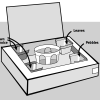
There’s No Place Like Home!
Source Institutions
In this activity, learners make their own bug boxes and test the habitat preference of selected "minibeasts" (bugs).
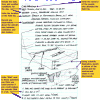
Keeping a Field Journal
Source Institutions
In this activity, learners start their own field journal to better understand the wildlife in their area.