
Search Results
Showing results 21 to 40 of 51
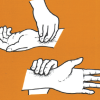
Cardiac Hill
Source Institutions
In this outdoor activity linking human health to the environment, learners use their pulse rates as a measure of the effort expended in walking on different slopes.
Screen Time
Source Institutions
This game asks you a series of questions about how much time you spend in front of a screen, not being active.
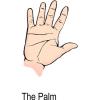
Right Hand/Left Hand
Source Institutions
In this activity (1st on the page), learners conduct a series of tests to find out which of their hands is more dominant. In other words, are they right-handed or left-handed?
Enhanced Water Taste Test
Learners conduct a "blind" taste-test of several types of enhanced or fitness water drinking water that has commercially added substances like vitamins, sugars, or herbs.
Space Stations: Follow the Bouncing Ball!
Source Institutions
In this activity, learners predict whether a ball on Earth or a ball on the Moon bounces higher when dropped and why.
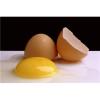
Protect That BRAIN!: Mr. Egghead
Source Institutions
This activity demonstrates the importance of wearing a helmet to protect the brain. An egg is used to symbolize a head with the shell as the skull and the inside of the egg as the brain.
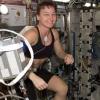
Space Stations: Beans in Space
Source Institutions
In this activity, learners perform 20 arm curls with cans that simulate the weight of beans on Earth versus the weights of the same number of beans on the Moon and in space.

Pitch, Roll and Yaw: The Three Axes of Rotation
Source Institutions
In this activity (page 87 of the PDF), learners move their bodies to better understand the three axes of rotation: pitch, roll and yaw.
Slowing the Flow
Source Institutions
In this experiment, pairs of learners explore how cold water affects circulation. The mammalian diving reflex (MDR) slows circulation when the body is exposed to cold water.

Statistics: Steppin' Out
Source Institutions
In this math lesson, learners construct box-and-whisker plots to analyze and compare data sets. Learners investigate whether or not long-legged people run faster than short-legged people.
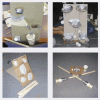
Get-Moving Game
Source Institutions
In this invention challenge activity, learners create an indoor game for one or two people that gets you moving.
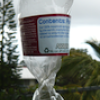
Crunch Time
Source Institutions
In this quick and easy activity and/or demonstration, learners use two empty 2-liter bottles and hot tap water to illustrate the effect of heat on pressure.
Catch the Beat
Source Institutions
This is an activity about music, movement, and math. Learners will start a rhythm pattern with 2, 3, or 4 beats. For instance, tap your foot, jump, clap, repeat.
Exercise and Memory
Source Institutions
This activity (page 1 of the PDF under SciGirls Activity: Exercise and Memory) is a full inquiry investigation into the effects of exercise on short term memory.
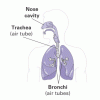
Heart and Lungs
Source Institutions
In this environmental health activity, learners investigate their breathing and pulse rates, and learn how these measurements are affected by physical activity.
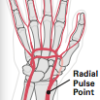
Heart Rate and Exercise
Source Institutions
In this activity about heart health (on page 27 of the PDF), learners measure their heart rates after a variety of physical activities and compare the results with their resting heart rates, and with
Bag of Bones
Source Institutions
In this activity, learners will use cereal to conduct an experiment and investigate how decreased bone density is related to increased risk of bone fracture.
Cardio Comparisons
Source Institutions
In this activity, learners discover how their heart rate changes in different situations.
Mission: Control!
Source Institutions
In this activity and game, learners will train to improve balance and spatial awareness by performing throwing and catching techniques on one foot.
Line Up: Using Math To Stand In Line
Source Institutions
Put math of measurement into lining up — and make waiting in line fun. Choose a size characteristic that learners can physically compare, such as foot length or hair length.