
Search Results
Showing results 1 to 19 of 19
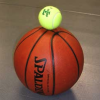
"Baseketball": A Physicist Party Trick
Source Institutions
This trick from Exploratorium physicist Paul Doherty lets you add together the bounces of two balls and send one ball flying.
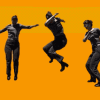
Mid-Air Maneuver: Skateboard Science
Source Institutions
To understand how skaters turn in midair, try this little experiment! Individuals can do this activity alone, but it works better with a partner.
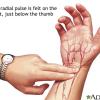
The Pulse of Gravity
Source Institutions
In this astronomy activity (page 3 of the PDF), learners will examine the effects of gravity on a person’s pulse and explore how gravity can differ from planet to planet.

Olympic Track Meet
Source Institutions
In this activity, learners discover how exercise helps keep the body healthy. Learners increase their heart rates by running and understand how running fast versus walking affects their pulse rates.
Thrown For A Curve: Pitch Like A Big Leaguer
Source Institutions
You may have tried to throw a curveball or a slider, or even a screwball, with an ordinary baseball and found it difficult to do.
Finding the Sweet Spot
Source Institutions
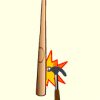
In this activity, learners will discover how to find the "sweet spots" on a baseball bat. Whenever an object is struck, it vibrates in response.
What Counts in Bounce
Source Institutions
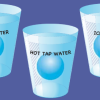
In this activity learners compare the bounciness of warm and cold racquetballs to see if temperature makes a difference in how well they bounce.
Ins and Outs of Respiration: Determine your Respiratory Rate
Source Institutions
Learners will determine their respiratory rate and explore the factors that affect breathing rate by filling out and using the Respiratory Chart provided in the lesson.
Bouncing Balls
Source Institutions
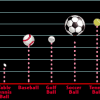
When baseball was in its infancy, the ball had plenty of bounce. Today's baseball may not seem to have bounce to it at all; if you drop a ball on the field it won't bounce back.

Hunger Signals
Source Institutions
This game explores the different reasons we choose to eat, and helps us be aware of when our body needs food and when it does not.
Right Foot/Left Foot
Source Institutions
In this activity (2nd on the page), learners conduct a series of tests to find out which foot is more dominant. In other words, are they right-footed or left-footed?

Pulse of Life: Measure Your Pulse
Source Institutions
In this activity, learners take their own pulse and explore how heart rate is affected by various activities.
Kites
Source Institutions
In this engineering/design activity, learners make a kite, fly it, and then work to improve the design. Learners explore how their kite design variations affect flight.
Right Hand/Left Hand
Source Institutions
In this activity (1st on the page), learners conduct a series of tests to find out which of their hands is more dominant. In other words, are they right-handed or left-handed?
Enhanced Water Taste Test
Learners conduct a "blind" taste-test of several types of enhanced or fitness water drinking water that has commercially added substances like vitamins, sugars, or herbs.
Space Stations: Follow the Bouncing Ball!
Source Institutions
In this activity, learners predict whether a ball on Earth or a ball on the Moon bounces higher when dropped and why.
Filling the Time
Source Institutions
Build time sense into the schedule by asking learners to predict what can happen in a certain amount of time: We have 20 minutes before outdoor time. What can you get done?
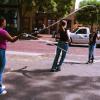
Twirling Rope Frequency
Source Institutions
In this activity (page 1 of the PDF under SciGirls Activity: Double Dutch), learners will stand twelve feet apart swinging a rope at the slowest tempo possible while someone uses a stopwatch to record
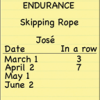
Endurance: How Many Can You Do in a Row?
Source Institutions
Combine math and exercise with this activity. Learners count how many times in a row they can skip rope or throw and catch a ball.