
Search Results
Showing results 21 to 40 of 58
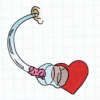
Heart to Heart
Source Institutions
In this activity, learners compare ways to measure their heart rates. Learners build their own stethoscopes and learn how exercise affects heart rate.
Stomp High Low
Source Institutions
Learners work together as a group to learn a new physical activity. After working for a few rotations, learners time themselves as part of a contest.
Fitness Factor
Source Institutions
In this online activity, learners partner up to complete several physical exercises and assess their starting fitness level.
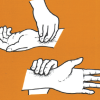
Cardiac Hill
Source Institutions
In this outdoor activity linking human health to the environment, learners use their pulse rates as a measure of the effort expended in walking on different slopes.
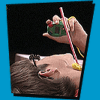
Drinking Straw Pulse Measurer
Source Institutions
In this health activity, learners create a device so that they not only feel their heartbeat, but also see it, using a straw and some clay.
Screen Time
Source Institutions
This game asks you a series of questions about how much time you spend in front of a screen, not being active.
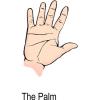
Right Hand/Left Hand
Source Institutions
In this activity (1st on the page), learners conduct a series of tests to find out which of their hands is more dominant. In other words, are they right-handed or left-handed?
Enhanced Water Taste Test
Learners conduct a "blind" taste-test of several types of enhanced or fitness water drinking water that has commercially added substances like vitamins, sugars, or herbs.
Space Stations: Follow the Bouncing Ball!
Source Institutions
In this activity, learners predict whether a ball on Earth or a ball on the Moon bounces higher when dropped and why.
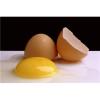
Protect That BRAIN!: Mr. Egghead
Source Institutions
This activity demonstrates the importance of wearing a helmet to protect the brain. An egg is used to symbolize a head with the shell as the skull and the inside of the egg as the brain.
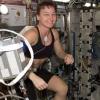
Space Stations: Beans in Space
Source Institutions
In this activity, learners perform 20 arm curls with cans that simulate the weight of beans on Earth versus the weights of the same number of beans on the Moon and in space.

Pitch, Roll and Yaw: The Three Axes of Rotation
Source Institutions
In this activity (page 87 of the PDF), learners move their bodies to better understand the three axes of rotation: pitch, roll and yaw.
The Pulse is Right
Source Institutions
In this online activity, learners measure their pulse rates and investigate how their pulses change when they engage in different activities.
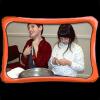
Slowing the Flow
Source Institutions
In this experiment, pairs of learners explore how cold water affects circulation. The mammalian diving reflex (MDR) slows circulation when the body is exposed to cold water.
Get-Moving Game
Source Institutions
In this invention challenge activity, learners create an indoor game for one or two people that gets you moving.
Crunch Time
Source Institutions
In this quick and easy activity and/or demonstration, learners use two empty 2-liter bottles and hot tap water to illustrate the effect of heat on pressure.

Race for Survival
Source Institutions
During this interactive "survival" game, students learn about the importance of camouflage and how it helps animals to blend into their surroundings, as either predator or prey.
Catch the Beat
Source Institutions
This is an activity about music, movement, and math. Learners will start a rhythm pattern with 2, 3, or 4 beats. For instance, tap your foot, jump, clap, repeat.
Take a Hike!: A Family Forest Walk
Source Institutions
In this family or group inquiry activity, learners use their senses to explore a local forest or woodland.
Exercise and Memory
Source Institutions
This activity (page 1 of the PDF under SciGirls Activity: Exercise and Memory) is a full inquiry investigation into the effects of exercise on short term memory.